Soft Skills training at MIT, Yeola

Reasons for getting rejected in an interview
Common mistakes candidates make in their interviews
Here are some important data regarding interviews :
Key to a successful interview
Be sure about your education, work history, and hobby. The interviewer wants to know more about you as a person and professional. Show confidence in yourself and your abilities.
1. The First Impression
The first impression is the last. Candidates only have seven seconds to make a great first impression. A genuine, warm smile, a confident handshake, and a clear introduction help to create a first impression. Professional attire is the key.
2. Prepare well
Preparation about self, education, and career will help to face interview questions confidently. Appropriate content will help to give valid answers to the questions asked by interviewers.
3. Know the Company
Interview questions are directly or indirectly related to the company you have applied for. Also, try to figure out the expected question list.
4. Non-verbal communication
Recruiters do not favor candidates with unprofessional body language; this includes your smile, posture, etc. Eye contact is a good way of demonstrating confidence, and interviewees should aim to make eye contact with their interviewers. Use a mirror while preparing for an interview. Try to figure out non-verbal communication. Watch out for your body language before going for an interview.
5. Digital Interview
After the pandemic, most recruiters prefer video interviews. Candidates need to develop their digital literacy. Check audio, video, and background before an interview. Be well-groomed and dress professionally.
Our sessions have helped our participants understand the science behind interviews. We are happy that our sessions helped our participants in cracking interviews.
All the best !!!
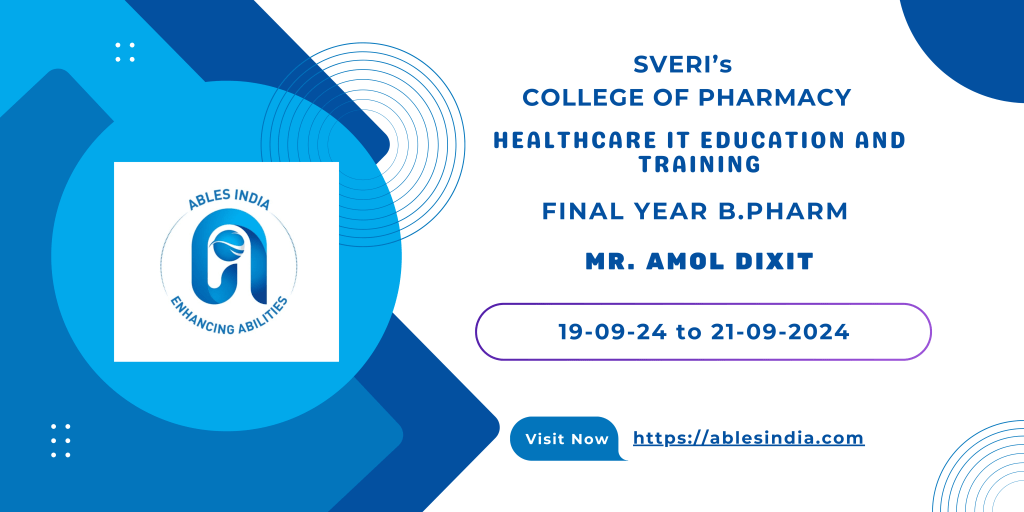
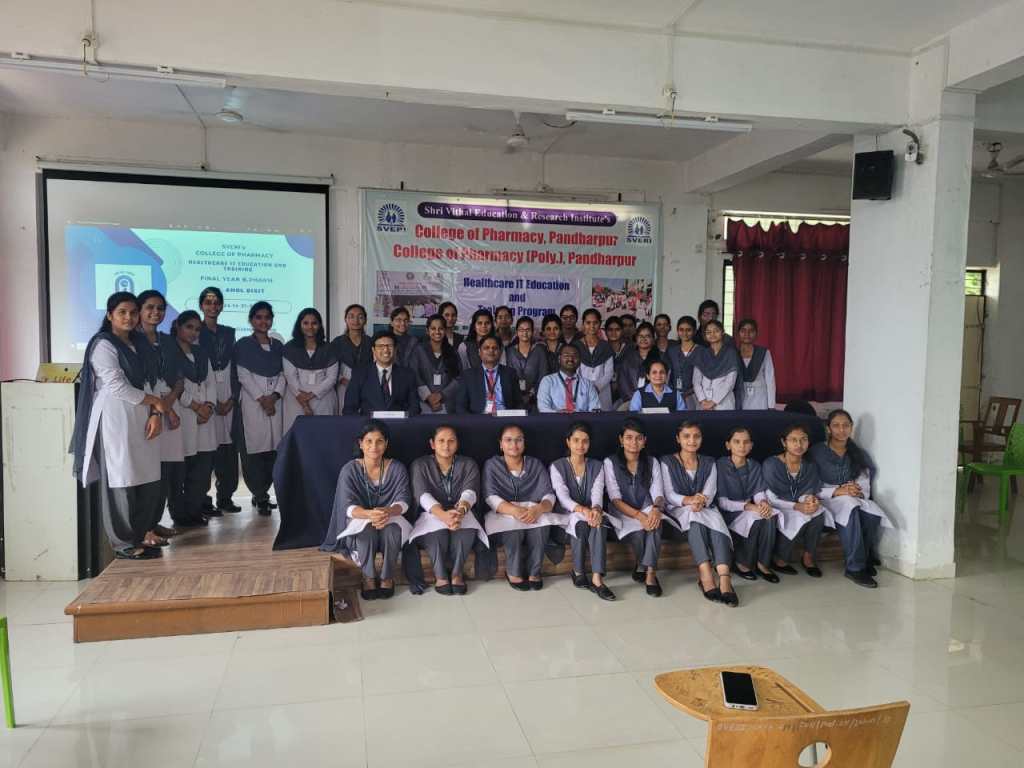
It was a knowledgeable experience to conduct the ‘Healthcare IT Education and Training’ for final-year students at SVERI’s College of Pharmacy, Pandharpur.
Thanks to Management (SVERI’s College of Pharmacy) and Principal Sir for the opportunity.
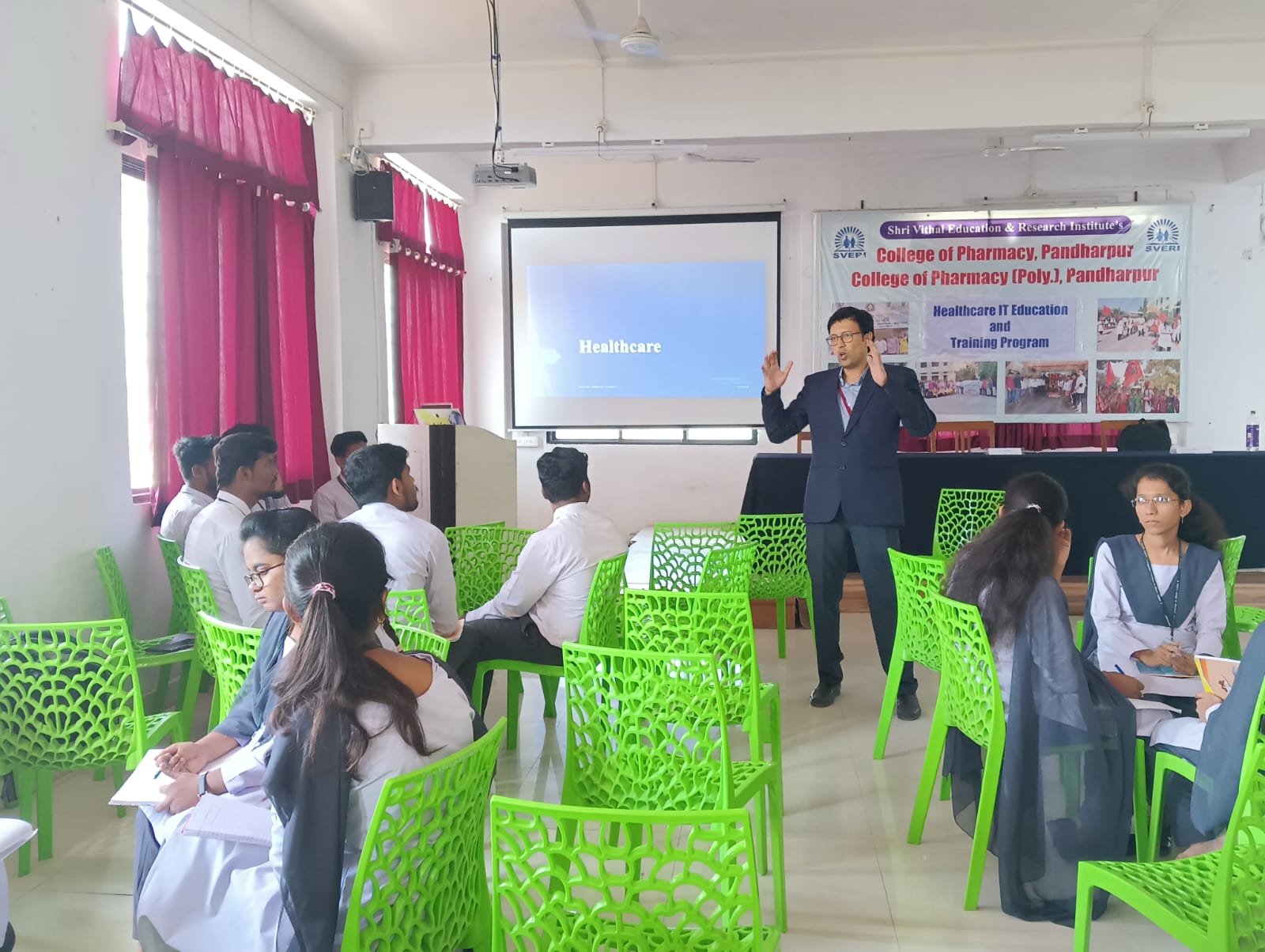
It was a great initiative by the Principal Sir for final-year students to have sessions on ‘Healthcare IT’ for students. The sessions helped students learn about opportunities in ‘Healthcare IT’ for pharmacy students.
Topics covered:
The ‘Knowledge Sharing’ session developed their confidence in expressing technical skills.
Thanks to our trainer – Mr.Amol Dixit for an informative sessions for final year pharmacy students.
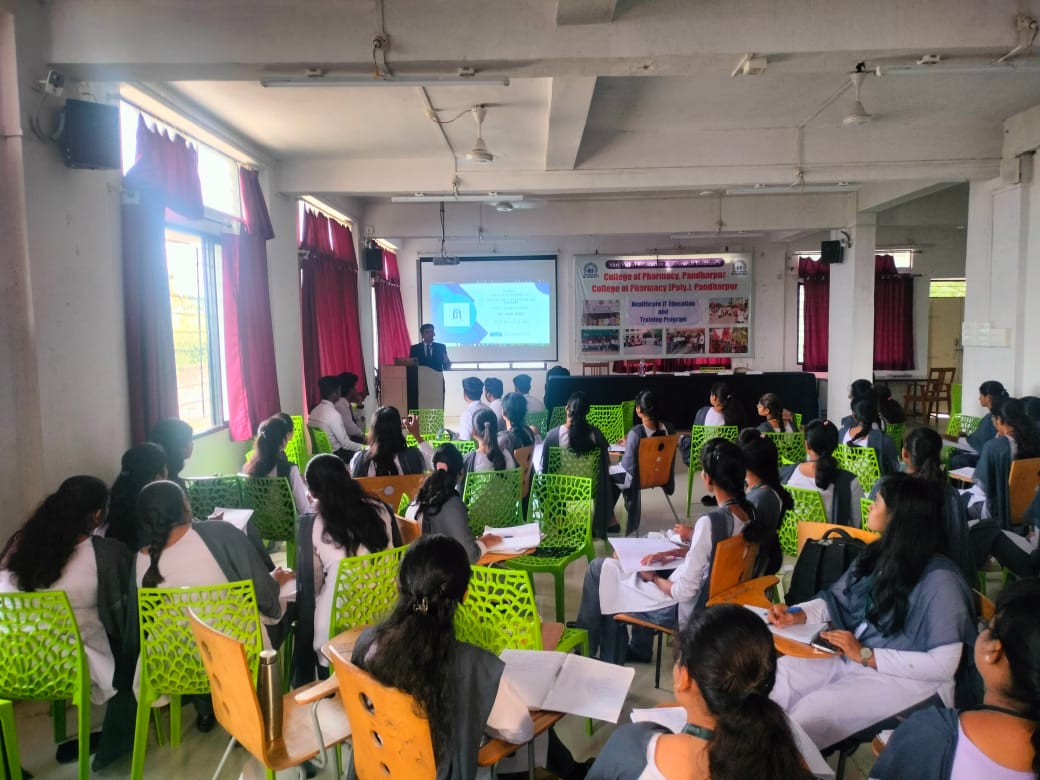

All the best to all students for their bright future!!!
Being a fresher is like a boon. In many Bollywood movies you must have heard a dialogue,”मै जब नया था, तब तुम्हारे जैसे ही था, energetic and enthusiastic, लेकिन मुझे system ने बदल दिया.” This dialogue tells you the advantages of being a fresher.
Freshers may bring energy, enthusiasm, and creativity to day-to-day work.
I conduct training sessions on ‘Campus to Corporate’ for freshers. In this blog, I have noted some difficulties of being freshers and how to overcome them.
Being a good student and being a good professional are altogether different aspects. College life is good, but it will end someday for something good. Students are sometimes reluctant to view what the future is offering them.
Every student must instill professionalism in attitude, behavior, and thought to be a good professional through proper coaching, mentoring, and training.
Here are some tips for being an ideal fresher:
Anyone gets only few seconds to make the first positive impression. Be prepared, professional, and well-groomed.
As a student, many exams are written, except viva. In professional life, oral communication and presentation skills are the key. It is always wise to develop communication skills like a professional when you are a student.
It helps to get a dream job.
No one is perfect and knows everything, as knowledge is ever-evolving. No one can learn everything on their own. You must learn to ask for help if needed.
A positive attitude is the key to success, as it helps you to have a growth mindset. Trust yourself and your capabilities to learn and progress, and adopt a growth mindset. Understand and analyze your strengths, weaknesses, opportunities, and threats (SWOT analysis). Be clear about your goals and thoughts.
I have observed that many students rely on their institutes and faculty for their knowledge. As a fresher, it is your accountability to gain knowledge and experience. Nobody is going to spoon-feed you. Proactively search for the right person and training for your growth. Consistently develop good habits as a professional.
Everyone gets an opportunity, but only one will grab it.
Timing in career matters as it matters in cricket.
Always be ready, and learn to take initiative. Instead of waiting for opportunities, learn to create opportunities. You are an architect of your career and life.
Organizations look for many skills in their employees. As a fresher, highlight those skills if you want to be selected.
They are Critical thinking, Problem-solving, Communication skills, Resilience, Consistency, Creativity, Emotional intelligence, Proactive, Decision making, Presentation skills, Discussion skills, Negotiation skills, Adaptability, and Coachable.
Being a fresher in the job market can be rewarding as you bring something unique to the organization. Companies are always ready to invest in freshers. Do ensure good returns to your employers.
To understand freshers properly, employers ask some customized interview questions during interviews:
Keep Learning!
Keep Growing!
Aptitude tests will test your ability to perform tasks and react to situations at work. It includes problem-solving, prioritization, and numerical skills, amongst other things. They are designed to measure intelligence and can measure the potential of a candidate applying for a job.
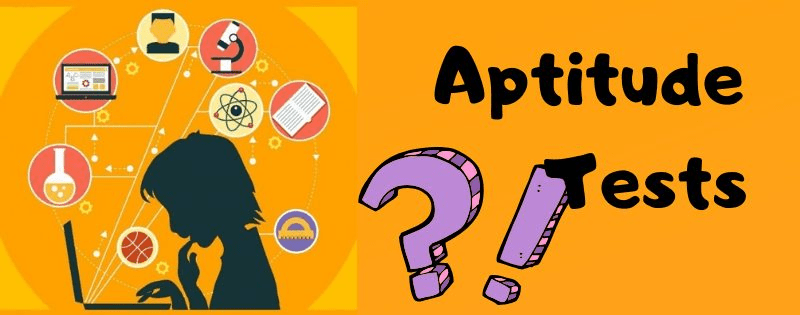
Many employers rely on aptitude tests for the hiring process. It allows the recruiter to assess the candidate’s IQ, logic, verbal reasoning, personality type, and mathematical skills.
Aptitude training helps students understand their areas of interest and strengths better. Students should start preparing from their school. Preparation for scholarship exams will help students with the gist of aptitude exams. It will also prepare the aptitude, basics, and time management needed to crack aptitude exams.
70% to 80% is a minimum acceptable score for an aptitude test. For most candidates, the difficulty of aptitude tests lies in completing the tests under timed conditions. In numerical or logical reasoning tests, candidates have about a minute to read the question, analyze the graphs and patterns, and choose the correct response.
Candidates should be ready to spend several weeks preparing for aptitude tests, as the most common reason for failure is lack of preparation. Regular study, practice, and study material are keys to cracking aptitude tests.
There are different types of aptitude tests:
How to Pass an Aptitude Test
Preparation for aptitude :
ABLES INDIA has been in training and development for more than eight years.
Our trainer – Mr. Amol Dixit, has experience working in the hospital, pharma, and healthcare industry. His training has helped many pharmacy students to achieve their career goals in the healthcare industry.
Considering the importance of academics, we have designed a program for students to cope with opportunities and challenges in the healthcare industry.
Healthcare Education and Training (HET) covers all the factors that can help students perform well in the healthcare industry.
Topics for HET are as follows:
*Note – There are sub-topics in the above-mentioned topics.
HET training helps participants understand various opportunities in the healthcare industry and pursue specialization courses for better opportunities.
Please contact – www.linkedin.com/in/amoldixit17 / dixitamol.17@gmail.com / 9604900458/ for further discussion.
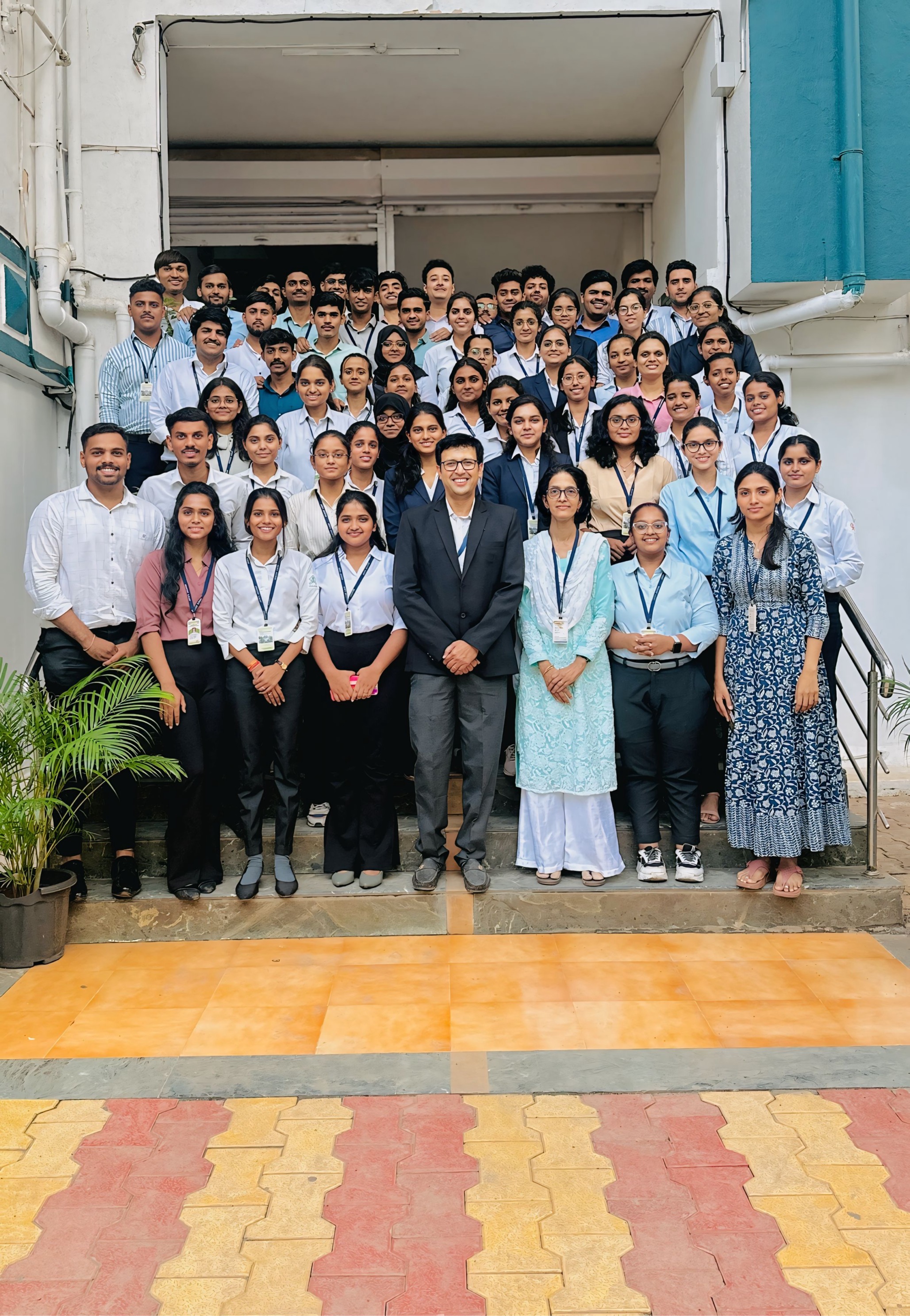
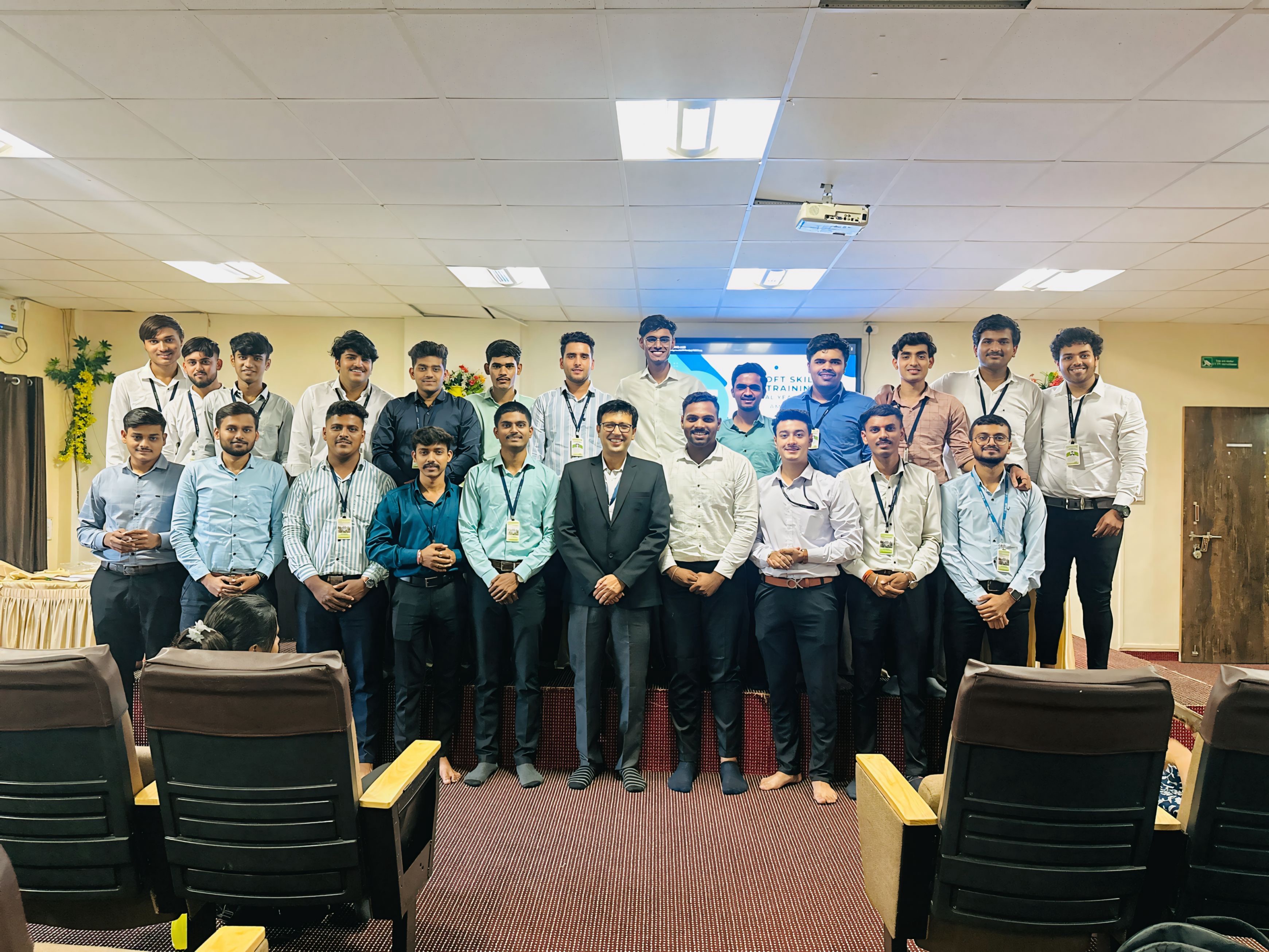
It was a great experience to conduct the ‘Soft Skills Training’ for final students of pharmacy, JSPM’S JSCOPR, Hadapsar, Pune.
Thanks to Management, Principal Madam, and ABLES INDIA (https://ablesindia.com/) for the opportunity.
It was a great initiative by the Principal Madam for final-year students to have soft skills sessions for students in their first term. It helped them to develop their personalities and groom themselves professionally before interview skills sessions.
Topics were customized accordingly, which helped students to understand their strengths and weaknesses as a person and professional. Goal setting, Time management, Emotional intelligence, and Presentation skills sessions enhanced their skills.
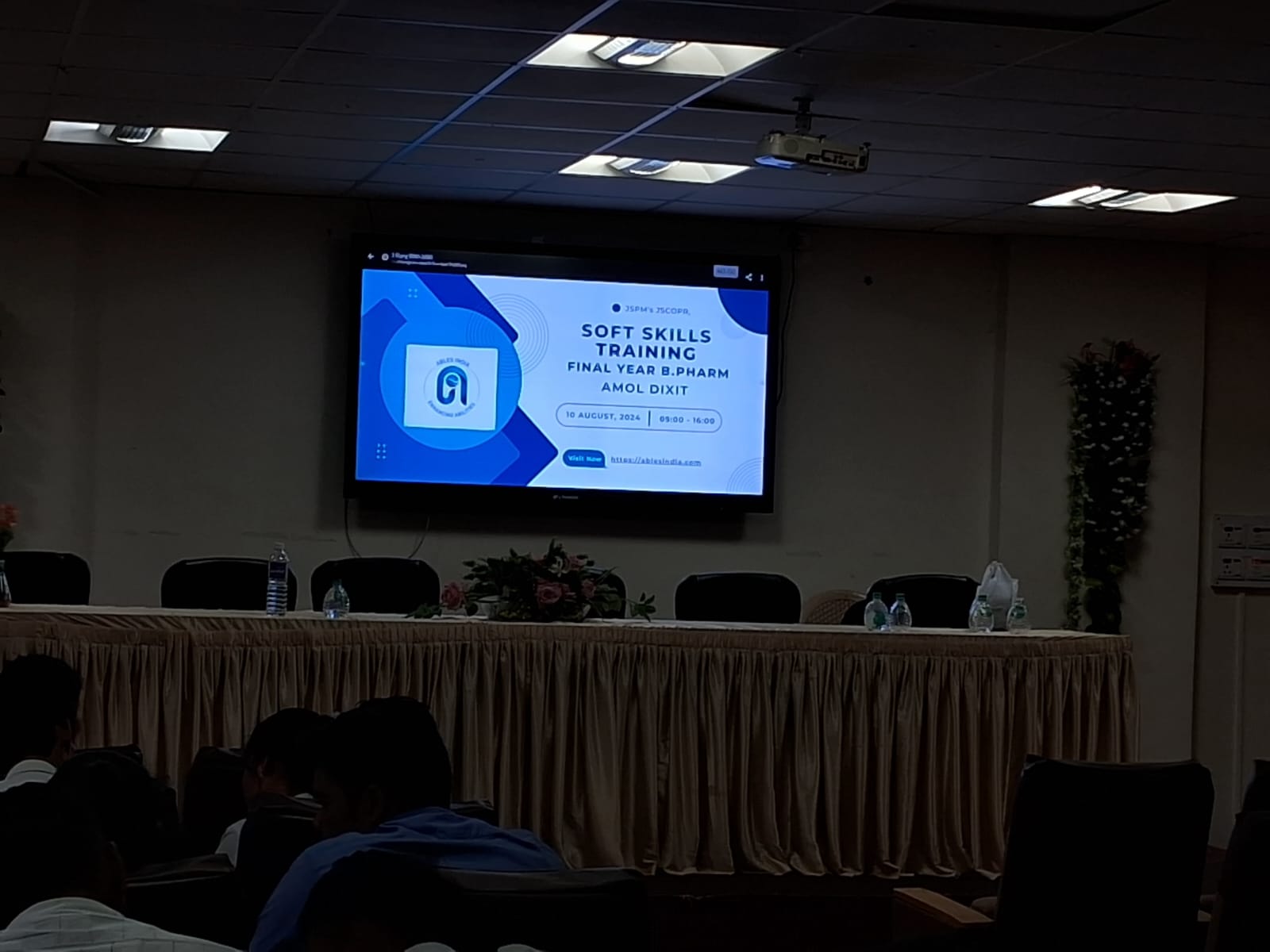
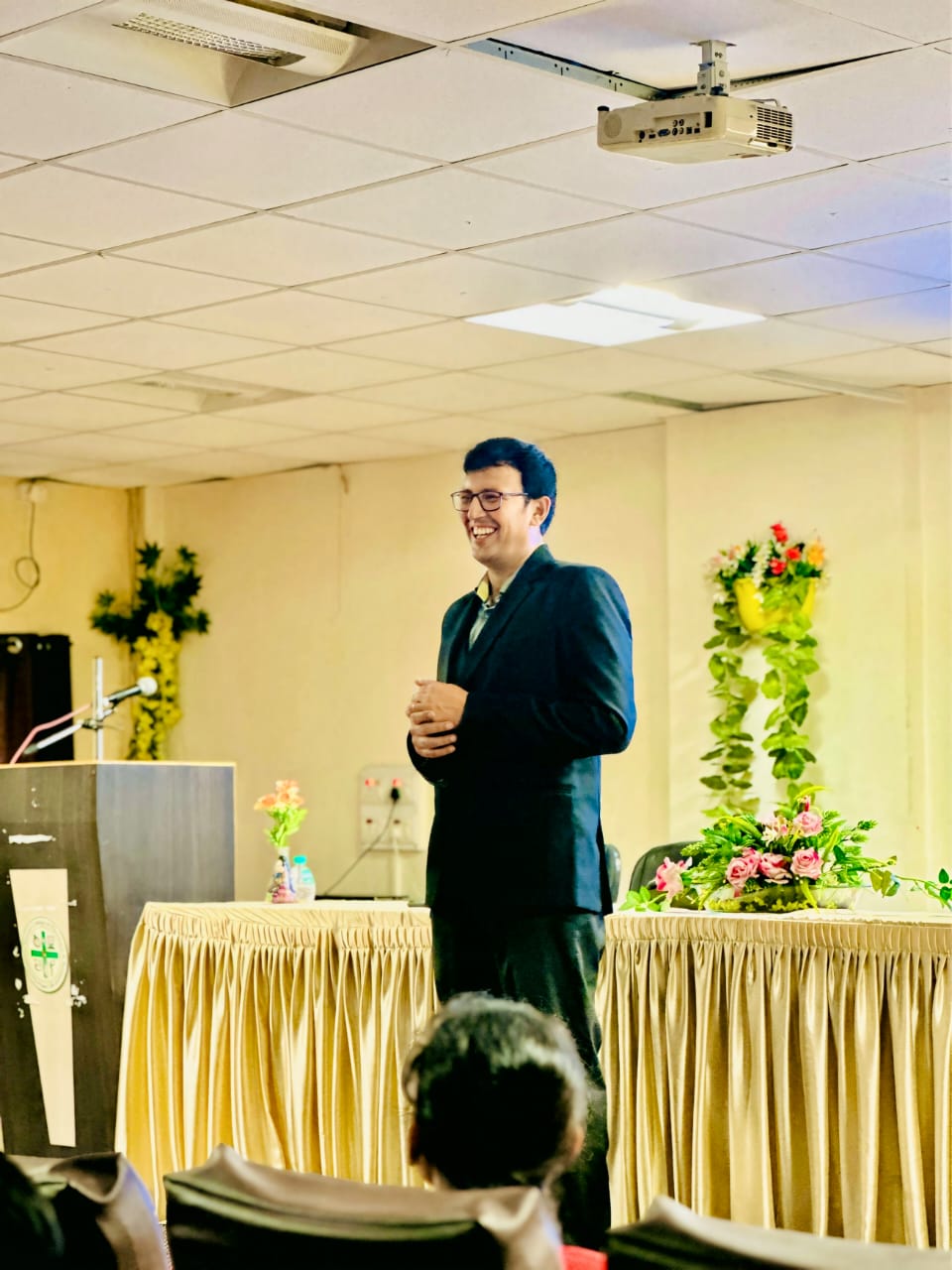
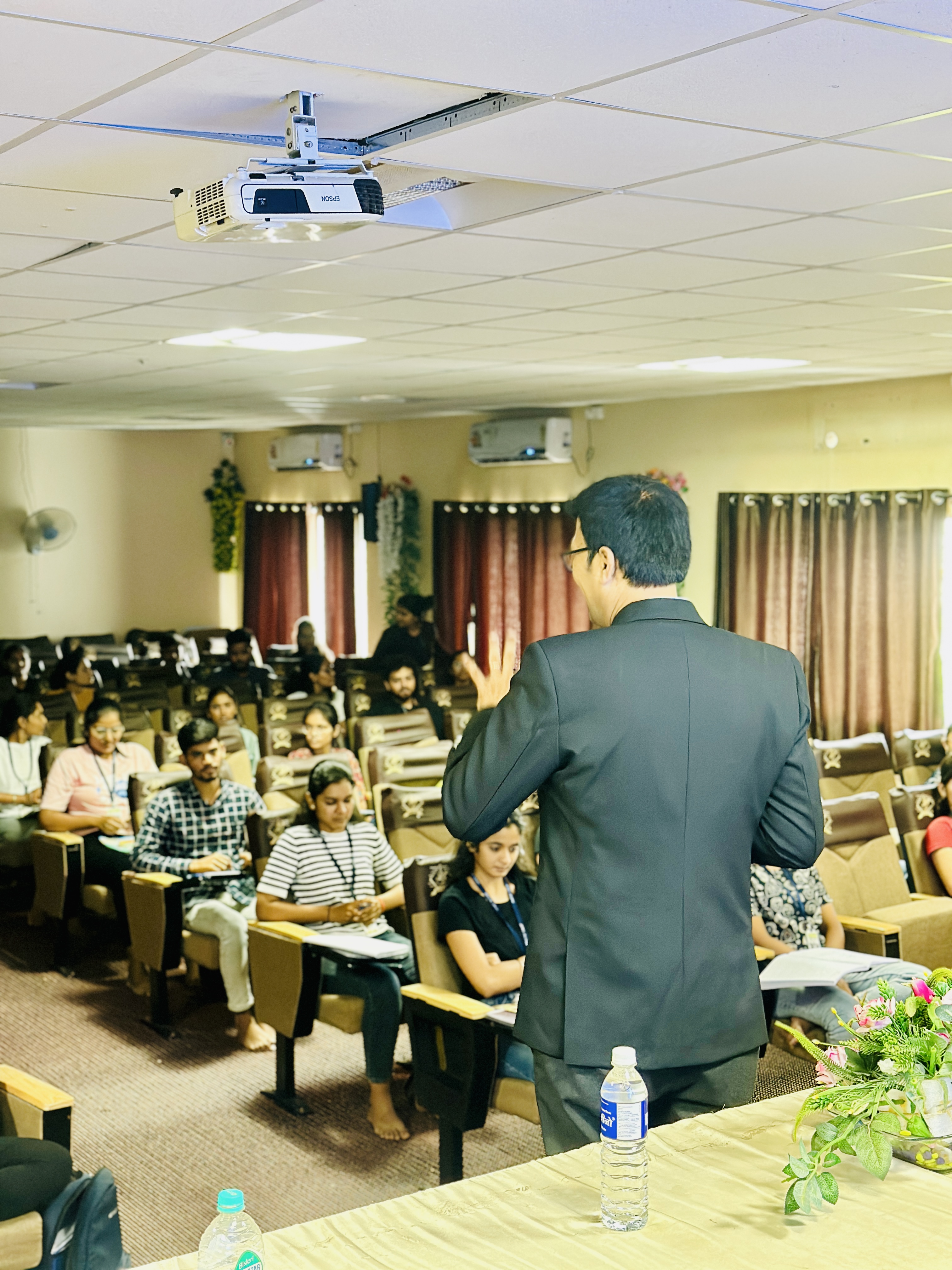
The 3-days interactive sessions enabled them to discuss and express themselves positively. The activities helped them to enjoy learning.
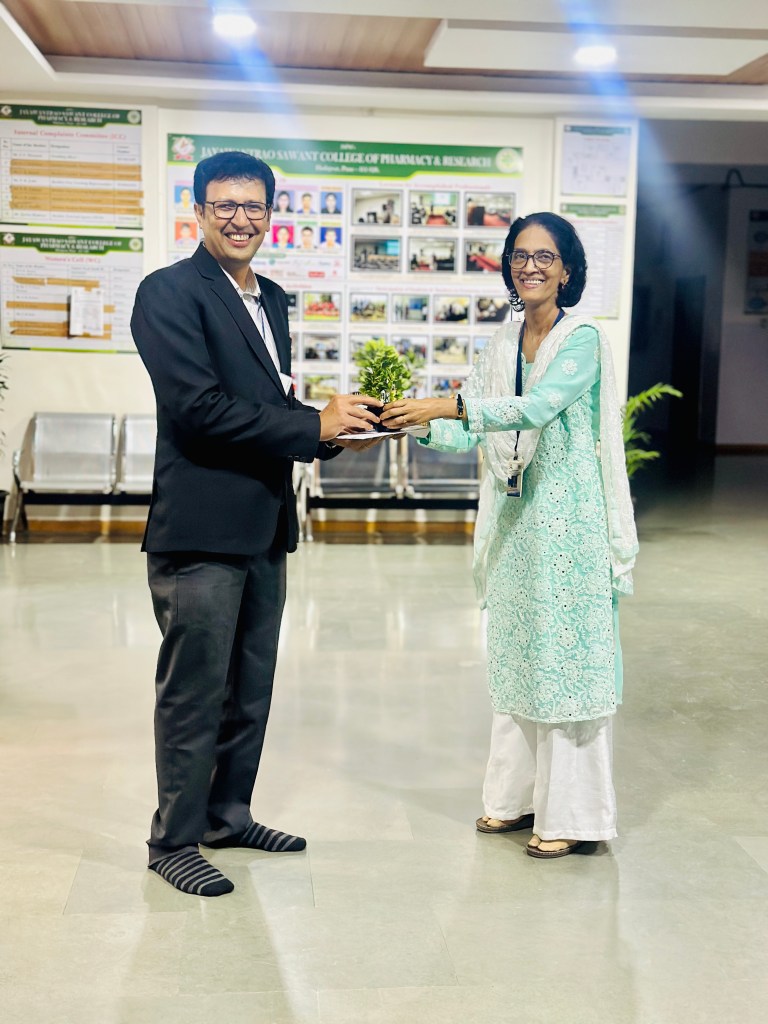
The feedback given by the students and staff for the sessions was overwhelming.
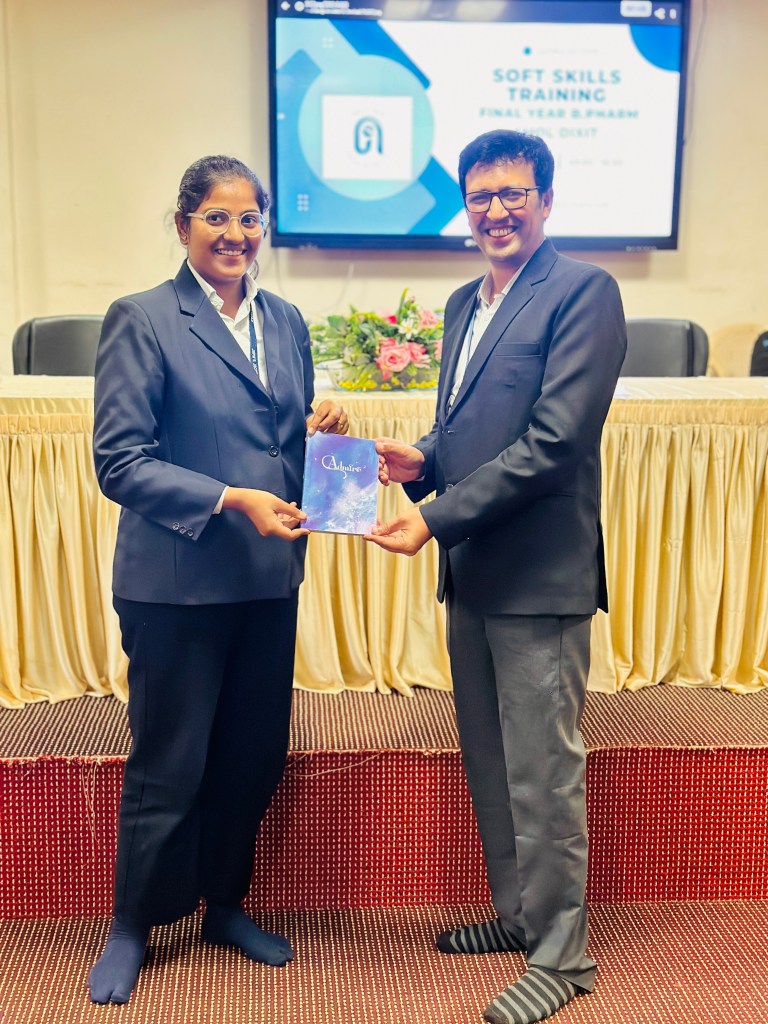
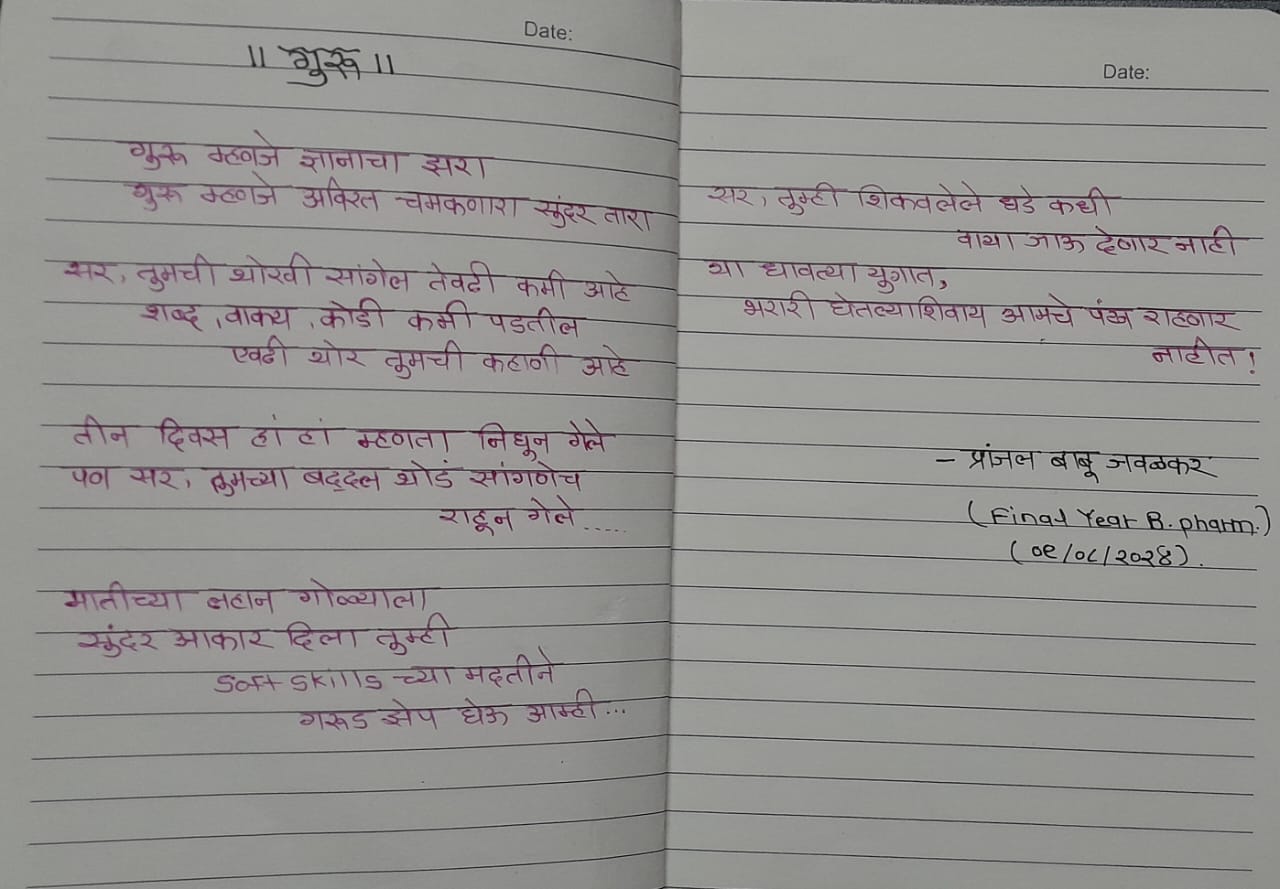
All the best to all students for their bright future!!!

ABLES INDIA has been in training and development for more than eight years. We have a team of passionate trainers who have trained 15,000 participants.
Considering the importance of academics, we have designed a program for students to cope with pressure at the initial stage.
Our program – Campus to Corporate, covers all the factors that can help students perform well.
Please feel free to contact me at dixitamol.17@gmail.com / 9604900458 for further discussion.
Training is crucial for human development.
Technically, staff training is a systematic acquisition of attitudes, concepts, knowledge, roles, or skills resulting in improved performance at work.
The need for training for improved productivity has become universally accepted.
The effectiveness and success of an organization depend on the people who form and work within the organization. The process of training and development is a continuous one.
Training and development is a platform to acquire new knowledge and develop further the skills and techniques to function effectively. It is a process of creating organizational conditions that will cause personnel to strive for better performance.
The benefits of training are as follows:
Objectives of Training and Development are:
Organizations are, therefore, encouraged to train and develop their staff to enhance their effectiveness.
ABLES conducts training for staff on various topics:
Please feel free to contact me at dixitamol.17@gmail.com / 9604900458 for further discussion.
ABLES INDIA has been in training and development for more than eight years. We have a team of passionate trainers who have trained 15,000 participants.
Sometimes, situations are tough to handle, which can cause stress. It is beneficial to be stressed, if optimal. When we fail to maintain the optimal stress level, it hampers our thinking process, health, and performance of students.
We have successfully conducted sessions on “Exam and Stress Management” in many institutes.
This program will help the participants in the following ways:
Thus, this program will help participants create a positive attitude towards education and exams; it will help them to manage any exam-related stress effectively, thus helping in improving their performance in exams.
Topics that are covered are:
This program will benefit students in preparing for their important exams (SSC /HSC/Entrance exams/Final years).
Please feel free to contact me at dixitamol.17@gmail.com / 9604900458 for further information.
Soft skills tend to be more personality-focused, which includes things like people skills, social skills, interpersonal skills, and transferable skills. They are general traits that help an individual to excel in the workplace and life.
Soft skills for success in career and life are communication, emotional intelligence, adaptability, problem-solving, critical thinking, leadership, teamwork, collaboration, and time management.
Benefits of soft skills training:
Studies indicate that soft skills account for roughly 80% of a person’s success throughout their career.
Soft skills training helps to learn and improve non-technical or personal skills. These involve interaction with others, including communicating effectively, collaborating with team members, being flexible, and understanding and managing emotions.
Soft skills training helps individuals manage teams effectively, delegate tasks efficiently, and build positive relationships, ultimately enabling them to become more effective and efficient leaders. Soft skills training is training that focuses on the development of abilities such as communication, teamwork, and problem-solving. Other soft skills include emotional intelligence, a positive attitude, and taking the initiative. It has to be learner-centered, enabling participants to interact, connect, and reflect.
A soft skills trainer is a professional who provides education regarding the art of business communication and relationships. They might work for an individual company or as a consultant. A soft skill trainer provides training to participants and helps them strengthen their interpersonal skills.
Being passionate is highly desirable for trainers. They should know how to maintain a passion for their work, keep their heart and minds open, and deeply care about their training. An effective trainer genuinely cares about learners’ success. The trainer should be an effective speaker with good interpersonal and teamwork skills to convey his thoughts. A trainer’s role is to build an environment that stimulates learning and growth for participants.
There are several options for delivering soft skills development training:
To date, I have trained almost 9,000 participants. My experience at different levels in various fields helped me to understand my participants, thus fostering a positive environment for my participants. It developed a learning environment for my participants to express themselves positively and effectively. Interactive sessions helped my participants to connect with themselves and others. My training sessions have helped participants develop personally and professionally. The positive results of training and placement have benefitted many institutes in getting accreditations.
I am proud to announce that most of my participants have achieved their career and life goals.
I wish a happy and prosperous life for all my participants.
All the best !!!
मला काही interviews attend करण्याची संधी मिळाली. Interviews मध्ये काही Graduates, Post graduates, Engineering, MCA आणि MBA candidates होते.
Interview मध्ये मला काही गोष्टी प्रकर्षाने जाणवल्या :
१. अर्ध्याहून अधिक candidates sandals, slippers घालून आले होते;
२. काही candidates jeans घालून आले होते;
३. काही candidates t-shirts मध्ये होते;
४. काहीजण formals मध्ये होते पण कपड्यांचे रंग खूपच भडक होते;
५. मुलांपैकी बहुतांश clean shave look मध्ये नव्हते;
६. काहीजण सतत mobile phone चा वापर करत होते;
७. काहीजण मित्रांशी किंवा फोनवर मोठ्याने बोलत होते;
८. बहुतांश candidates ची body language professional नव्हती.
९. काहीजणांचा attitude professional नव्हता.
जेव्हा interview चा निकाल लागला तेव्हा वरच्यांपैकी कोणाचेही selection झाले नाही. सर्व candidates ला जवळपास सारखेच टक्के होते. पण वरील नमूद केल्याला गोष्टींमुळे बहुतांश candidates interview देण्याआधीच interview मधून जवळजवळ बाहेर पडले होते. जे select झाले त्यांना चांगले package मिळाले.
Interviewers कधी selection न होण्याचे कारण सांगत नाहीत.
Training घेताना माझा नेहमी हा प्रयत्न असतो की प्रत्येक participants ला ह्या गोष्टी समजून सांगाव्यात व mock interview session मध्ये selection होण्यासाठी लागणाऱ्या गोष्टी करून घ्याव्यात. त्याचा चांगला परिणाम मला placement मध्ये दिसतो. माझ्याकडे trained झालेले बहुतांश participants चांगल्या companies/organizations मध्ये job ला लागले आहेत. ही माझ्यासाठी आनंदाची गोष्ट आहे की कोणाच्यातरी यशामध्ये माझा खारीचा वाटा आहे.
Interviews फक्त ५-१० मिनिटांची असते. कधीकधी वेळ जास्त होऊ शकतो. पण त्या वेळेत आपण कसे आपल्या व्यक्तिमत्वाचे, आपण मिळवलेल्या ज्ञानाचे आणि आपल्या योग्यतेचे सादरीकरण करतोय, ह्यावर आपले selection अवलंबून असते.
आशा आहे हा लेख interview ची तयारी करणाऱ्या candidates ला उपयोगी ठरेल…✍️
 ABLES INDIA