India – An emerging sporting giant in multi-sport events.

India has won 779 medals at the Asian Games since the inaugural edition in 1951. India finished with a record haul of 107, including 28 gold, at the 2023 Asian Games in Hangzhou.

India finished its Asian Games campaign with a record haul of 107 medals (28 gold, 38 silver, 41 bronze) to finish fourth (on gold-medal count), improving on its 2018 tally of 70 medals, which included 16 gold.

India had its best-ever medal haul, beating the previous best medal tally of 70 medals, achieved at the 2018 Asian Games. It became the fourth nation to do so after China, Japan, and South Korea.

India was the best-performing nation in Archery, Kabaddi, Cricket, and Field Hockey. India won its first-ever gold in badminton. The gold-winning men’s hockey team automatically qualified for the 2024 Summer Olympics.

The Khelo India Scheme has done wonders in creating a powerful bench strength for India; 124 athletes trained under the Khelo India Scheme were part of the Indian contingent in the Asian Games this year.

The Khelo India Scheme, introduced in 2017, stands paramount in spotting and nurturing talent from the grassroots. The Khelo India scheme has impacted the complete sports environment, including facilities, coaching, recognition programs, effective functioning, sports economics, and competitive structure. The current sports policy approach empowers young individuals to engage in sports. Further, there are efforts to instill a culture of sports and fitness from an early age, exemplified by efforts like the FIT India Movement. A Pan-Indian Sporting culture is developed by identifying, developing, and encouraging talent in sports discipline.

However, while we celebrate this success, it is essential to remember that there is still much more to achieve. But looking at recent performance in multi-sport events, India will surely emerge as a sporting giant in upcoming events.

Jai Hind 🇮🇳
Sages and Science

ISRO has successfully launched Aditya L1. On 23rd August 2023, our Chandrayaan-3 successfully landed on the south pole of the Moon. Indian culture is a good combination of religion and science; the ancient sages made many discoveries that are still relevant in the modern world. 

In this blog, we will look at such inventions and works of sages which contributed to modern society.


Aryabhata (Sanskrit: आर्यभट, ISO: Āryabhaṭa) or Aryabhata I (476–550 CE) was the first of the mathematician-astronomer who mentioned that in 3600 Kali Yuga, 499 CE, he was 23 years old) and the Arya-Siddhanta. 

  • In 499 CE, he wrote a text on astronomy and an unparalleled treatise on mathematics called Aryabhatiyam.
  •  He correctly stated that the earth rotates about its axis daily. 
  •  He also succeeded in explaining the geocentric model of the Solar System.
  •  He found the calculation of p (Pi) to four decimal places: 3.1416 and the sine table in trigonometry.

Bhaskaracharya (1114-1183 BCE)  has been called the greatest mathematician of medieval India. 

  • He concluded that dividing by zero would produce an infinity. 
  • His renowned mathematical works are called Lilavati and Bijaganita.
  • As per Surya Siddhant, objects fall on earth due to a force of attraction by the earth.

Acharya Kanad was an Indian scientist, philosopher, and the founder of the Vaisheshika school of Indian Philosophy.

  • He wrote a book on his research on the atom and became famous as the Father of Atomic Theory. 
  • Saint Kanad was very interested in knowing the minute details. Due to his sense of service, people started calling him Kanad (Kan- smallest particle)
  •  He was the first person to talk about atoms and molecules. 
  •  He said that Atoms is an indivisible particle. The theory occurred in his mind when he observed the smallest particle of rice. He called this Parmanu (Atom). 
  • He proposed that paramanu (atom) is an indestructible particle of matter. He has classified all the objects of creation into nine elements: earth, water, light, wind, ether, time, space, mind, and soul. 

Nagarjuna was a great Indian metallurgist and alchemist. 

  • He did his research for around 12 years in chemistry and metallurgy. Textual masterpieces like Ras Ratnakar, Rashrudaya, and Rasebdramangal are his renowned contributions to the science of chemistry. 
  •  He also discovered the alchemy of transmuting base metals into gold. He did his experiments, especially on mercury. 
  •  He distinguished between the metals and sub-metals and also between solvents and soluble. 
  •  He stated that Mercury could dissolve all metals. He also invented the processes of “Distillation” and “Calcinations”. 
  •  He was the first person on the planet to use a Mercury as medicine.
  • As the author of medical books like “Arogyamanjari” and “Yogasar.” 
  •  He was Chancellor of the famous University of Nalanda. 

Charaka was one of the principal contributors to Ayurveda, a system of medicine and lifestyle developed in ancient India. He was the Father of Medicine.

  • He is known as a physician who edited Charaka Samhita, one of the foundational texts of classical Indian medicine and Ayurveda, included under Brhat-Trayi.
  •  His renowned work, the Charak Samhita, is considered an encyclopedia of Ayurveda. 
  •  He revealed through his innate genius and inquiries the facts on human anatomy, embryology, pharmacology, blood circulation, and diseases like diabetes, tuberculosis, heart disease, etc. 
  • In the Charak Samhita, he described the medicinal qualities and functions of 100,000 herbal plants. 
  • He has emphasized the influence of diet and activity on the mind and body. He has proved the correlation between spirituality and physical health contributed to diagnostic and curative sciences.  
  •  He was the first person to know the concepts of digestion, metabolism, and immunity. A body functions because of three principles or dosha continuously regulating the human system – movement, transformation, and lubrication & stability. 

Shushruta is known as the originator of plastic surgery. Acharya Sushruta was a great Indian Physician and was known to be the Father of Surgery or the Father of Plastic Surgery.

  • He described six varieties of accidental injuries encompassing all parts of the body.  
  • The Sushruta Samhita is one of the most important surviving ancient texts on medicine, and it is considered a foundational text of Ayurveda. 
  • He was the first surgeon who performed complicated surgeries 2600 years ago. 
  • The Sushruta Samhita has 184 chapters containing descriptions of 1,120 illnesses, 700 medicinal plants, 64 preparations from mineral sources, and 57 preparations based on animal sources. It describes thoroughly the surgical techniques of making incisions, extractions of foreign bodies or particles, how to probe, excisions, tooth extraction, how to remove the prostate gland, dilation of Urethral stricture, vesicolithotomy, hernia surgery, how do C-section (Caesarian for baby delivery), laparotomy, management of intestinal obstruction, perforated intestines and accidental perforation of the abdomen with protrusion of omentum and the principle of fracture management. 
  •  He also classified eye diseases – cataract surgery.
  •  He performed Rhinoplasty (restoration of a damaged nose) and other challenging operations. 
  •  In the ” Sushrut Samhita,” he prescribes treatment for twelve types of fractures and six types of dislocations.
  •  He used 125 types of surgical instruments – scalpels, lancets, needles, Cathers, and rectal speculums; designed from the jaws of animals and birds. 
  •  He introduced several stitching methods – the use of horse hair as thread and fibers of bark. 

Varahamihira, also called Varaha (born 505, Ujjain, India—died 587, Ujjain) was a philosopher, astronomer, mathematician, and author of the Pancha-siddhantika.

  • He notes that the Moon and planets are lustrous not because of their light but due to sunlight. 
  •  In the Bruhad Samhita and Bruhad Jatak, he revealed his discoveries in geography, constellation, science, botany, and animal science. 
  •  In his treatise on botanical science, Varamihir presents cures for various diseases afflicting plants and trees.
  • Varaha Mihira constructed Meru Stambh (Kutub Minar) 2200 years ago for astronomy research. 
  •  Panch Siddhanta holds a prominent place in the phase of astronomy. 
  •  He also contributed an encyclopedic Brihat – Samhita that covers the subjects of all human interests like rainfall, astrology, planetary movements, gems, pearls, rituals, etc. He also discovered trigonometric formulas, improved the accuracy of sine tables, and defined the property of zero and the calculation of binomial coefficients. He also succeeded in the fields of hydrology, ecology, and geology.

Patanjali was a great Indian Sage and Author of Sanskrit works. The best of his work is Yoga Sutras, a classical yoga text. The Yoga Sutras of Patanjali are 196 Indian Sutras on Yoga.

  • The yoga Sutras talk about life and beyond life. In his yoga Sutras, Patanjali explains the eight limbs of yoga for becoming a self-realized person.
  • He prescribed the control of prana (life breath) to control the body, mind, and soul.
  • Acharya Patanjali‘s 84 yogic postures effectively enhance the efficiency of the respiratory, circulatory, nervous, digestive, and endocrine systems. 
  • Yoga has eight limbs where Acharya Patanjali shows the attainment of the ultimate bliss of God in samadhi through the disciplines of yam, niyam, asan, pranayam, pratyahara, dhyana, and dharna. The Science of Yoga has gained popularity because of its scientific approach and benefits.
  • Acharya Patanjali will forever be remembered and revered as a pioneer in the science of self-discipline, happiness, and self-realization.

Acharya Bharadwaj (The pioneer of aviation technology)

The Vymaanika Shaastra contains 3000 shlokas in 8 chapters. The book deals with the operation of ancient vimanas. It includes information on steering, precautions for long flights, protection of the airships from storms and lightning, and how to switch the drive of solar energy or some other form of energy.

  • He authored the Yantra Sarvasva, includes astonishing and outstanding discoveries in aviation science, space science, and flying machines. 

Acharya Kapil (3000 BCE) Father of Cosmology gifted the world with the Sankhya School of Thought, throwing light on the nature & principles of the ultimate Soul (Purusha), primal matter (Prakruti) & creation. 

  • He asserted that Prakruti, with the inspiration of Purusha, is the mother of cosmic creation & all energies. 
  • He gifted the world with the Sankhya School of Thought. 
  • His pioneering work threw light on principles of the ultimate Soul (Purusha), primal matter (Prakruti), and creation. 
  •  Sankhya Darshan is defined as Meditation or Dhyaan, the state of mind that remains without any subjectivity/objectivity – without any thought is called meditation. 

Rishi Kanva – The Science of Wind – The great Sage Kanva explained science behind wind in some of the sections of Rigveda. Vedas described 48 different forms of winds produced due to lightning. 


Baudhayana was a great Mathematician and the author of the Sulba Sutra consisting several mathematical results. He discovered the value of the Pi. 

  • He also discovered Pythagoras Theorem in Sulba Sutra.
  •  In Sulba Sutra, he also stated that if a and b are the two sides and c is the hypotenuse, such that a is divisible by 4. 
  • The other theorems include the diagonals of rectangle bisecting with each other and diagonals of rhombus bisecting at right angles.

Rishi Agastya – Father of the Electric Battery

  • He stated various theories to generate clean energy thereby providing electricity with natural resources. The modern battery we use today uses the same principle.
  • Rishi Agastya used an earthen pot, copper plate, copper sulfate, wet sawdust, and zinc amalgam. When a cell prepared according to Agastya Samhita, gave an open circuit voltage of 1.138 volts and a short circuit current of 23 mA. 
  •  He also discovered a way to polish gold, copper, and silver with a battery. 

It’s Ok !!!

It is a motivational poem. It motivated many to understand the true meaning of life. I am happy to share that poem with all my readers.

It’s ok to fall,

But learn to get up again !!!

It’s ok to fail,

But learn to succeed again !!!

It’s ok to get tired,

But learn to work again !!!

It’s ok to fall sick,

But learn to be healthy again !!!

It’s ok to be fat,

But learn to be fit again !!!

It’s ok to be sad,

But learn to smile again !!!

It’s ok to cry,

But learn to be happy again !!!

It’s ok to have nothing,

But learn to earn everything again !!!

It’s ok to lose,

But learn to win it again !!!

It’s ok to unlearn,

But learn to relearn again !!!

It’s ok to be off track,

But learn to be on track again !!!

Trust me !!!

It is really ok !!!

← Back

Thank you for your response. ✨

Hard Skills vs. Soft Skills

In this competitive world, employers look for soft skills rather than hard skills in their candidates. It is easy to teach hard skills, but it is difficult for employers to teach soft skills.

Candidates with good soft skills tend to get promoted gradually. They can get along with the team they work with, adapt to changes at the workplace and in the market.

I have noted down some differences between hard skills and soft skills. These differences will help you understand the importance of soft skills and their implementation.

Soft skillsHard skills
  1. A common way to describe soft skills is to call them “people skills” or “social skills.”  1. Hard skills are specific abilities that help people carry out different jobs.
  2. To be good at soft skills usually takes Emotional Intelligence or EQ.2. To be good at hard skills usually takes IQ
3. One needs to understand and implement them to master soft skills.    3. Hard skills can be learned in school and from books. Hard skills are specific, teachable abilities that can be defined and measured.
  4. Soft skills are usually self-taught and self-developed. One needs to be self-motivated or motivated to acquire them.  4. Hard Skills are a set of special skills that are obtained through years of practice or learning.
  5. Soft skills are less tangible and harder to quantify, such as etiquette, getting along with others, listening, and engaging in small talk.  5. These skills are easily visible, tangible, and well-defined. These skills vary from person to person in quality and quantity.
  6. Soft skills are more personality-oriented interpersonal skills, such as teamwork, flexibility, patience, persuasion, and time management. Because employers have an easier time teaching new hires hard skills, employers often look for job applicants with specific soft skills instead.  6. Hard skills are usually related to a particular field, and require specific knowledge in order for them to be gained. Hard skills are often listed on a job applicant’s cover letter and resume so employers know the applicant’s qualifications for an open position.
7. As such they are becoming increasingly valuable to all employers, as it helps them to understand how you will fit in with their working environment and how you will perform as one of their employees.    7. Hard skills are those that you need to be able to perform a particular job. These often vary depending on the type of role you will be performing or the industry in which you will be working in. They can usually be developed through on-job training.
  8. Soft skills are subjective skills that are much harder to quantify. Also known as “people skills” or “interpersonal skills,” soft skills relate to the way you relate to and interact with other people.8. These hard skills are often listed in your cover letter and on your resume and are easy for an employer or recruiter to recognize.
  9. The difficulty of teaching and defining soft skills for a job is the reason why a list of soft skills on a resume is valued. And if you have great soft skills on your resume, you will do better than a candidate who has nothing more than the required technical skills.9. The beautiful thing about hard skills is that you can learn new ones at any time. Plus, once you learn a hard skill, it’s transferable, meaning that you can take those hard skill abilities along wherever your career takes you.
  10. Soft Skills are a set of skills or traits that include behavior, communication skills, teamwork ability, management skills, appropriate attitude, etiquette, self-presentation, etc.  10. Hard skills are quantifiable, such as proficiency in a foreign language, earning a degree or certificate, operating a machine, or programming a computer.
  11. Soft skills can be termed as personal attributes and grace that helps in maintaining better relationships as well as a sense of harmony between people. Soft skills include your interpersonal abilities—your communication skills and how you relate to others.11. There are typically designated levels of competency and a direct path for excelling.
12. Examples of soft skills are : Ability to work under pressure, Decision making, Time management, Self-motivation, Leadership, Adaptability , Teamwork, Creativity, Interpersonal Skills, Leadership, Project management, Problem-solving, Ethics, Perseverance, Communication skills, Communication or networking skills, etc.  12. Examples of hard skills are : A degree (or other academic qualification). An industry-specific certification, Coding ability, Typing speed, Computer skills, Proofreading, A degree or certificate in a particular field or industry, Applied science, Computer programming, Editing, Engineering, Foreign language skills (speaking, reading, writing), Machine operation, etc.
Employability skills, Life Skills, Soft skills and Corporate Trainer

Happy Guru Purnima !!!

On Guru Purnima, pupils worship their spiritual Gurus (Teachers or Gods) on this day for imparting their knowledge for living a happy life. Guru will help you in the spiritual journey and household life. Guru will give you intuition powers to decide what is good and bad for your life.

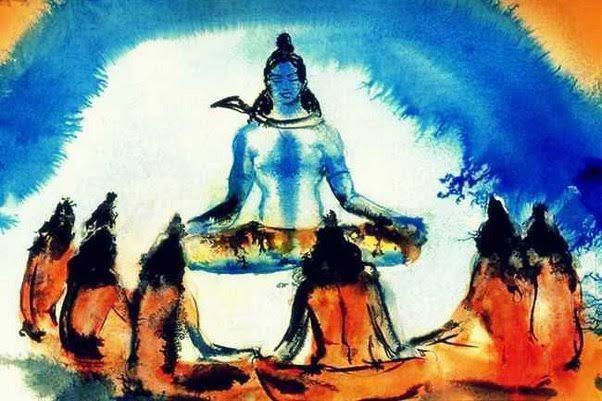
In yogic tradition, Lord Shiva, the first guru, began the transmission of Yoga to the Saptarishis.

It is also the birthday of Maharshi Vyas, who wrote ‘Mahabharata’ and other holy books. All the holy books of Hinduism dictate the importance of Gurus and the extraordinary bond between a Guru and his Shishya (disciple). A guru guides the spiritual progress of their students (known as shisha). Guru controls the fruition of karmas and protects his disciples. We can learn what truth, dharma or righteousness, renunciation, and love mean. Obedience to the Guru is considered very important. We celebrate Guru Purnima to honor and thanks our teachers, who remove the darkness from our minds. They have a special place in the lives of their followers since ancient times.

ॐ गुं गुरुभ्यो नम:।

ॐ परमतत्वाय नारायणाय गुरुभ्यो नम:।

ॐ वेदाहि गुरु देवाय विद्महे परम गुरुवे धीमहि तन्नौ: गुरु: प्रचोदयात्।

The Bhagavad Gita describes the guru as a self-realized soul who imparts transcendental knowledge to disciples.

In the modern world, gurus/teachers guide us to happy and prosperous life and career. One who guides us on the righteous path can be our gurus. It is a tradition to thank the teachers for their guidance and life lessons.

Unemployment in India

We are hearing lots of news nowadays about increasing unemployment in India.

There may be some global or political perspectives to it. To understand the issue properly, one must first understand the five root causes for unemployment in India.

Population

First, we should talk about India, which has an area of 3,387,590 km² with land boundaries of 13,888km and coastlines of 7,000 km.

Population: India – 1,425,776,000

The population density of India in 2022 was 431.11 people per square kilometer. 

Population is also hampering our per capita income.

Per Capita Income is a metric used to determine the amount of money earned per individual in a nation or geographical area. India ranks 130th with 9,073$.

Jobs opportunities are increasing, but the rate is not as same as our population. It is difficult to give employment to a fast-growing population.

More people means an increased demand for food, water, housing, energy, healthcare, transportation, and more. And all that consumption contributes to ecological degradation, increased conflicts, and a higher risk of large-scale disasters like pandemics.

The 5 effects of rapid population growth are increased economic growth of a country, growing demand for jobs, lack of housing and schools, lack of infrastructure leading to poor living, and increase in pollution and waste. So growing population needs to be controlled to bring the unemployment rate down.

Lack of Soft skills– One to be successful in a career, one must have both hard skills and soft skills. There are many examples where people with good grades and technical skills have failed miserably in their careers. The only reason is a lack of soft skills. Companies nowadays prefer candidates with soft skills rather than hard skills. Examples of soft skills are – Intrapersonal skills, Interpersonal skills, communication skills, etc.

Lack of employability skills – There are many job opportunities available, but candidates lack employability skills to grab those opportunities. Employability skills help you to be employable. It enables you to be a good employee as well as an employer. Employability skills are mostly professional skills such as communication, negotiation, presentation, teamwork, time management, interview skills, etc.

Lack of Life skills – People who lack professional ethics find it hard to get jobs. Professional ethics develop sincerity, the must quality for success. Positive attitude and emotional intelligence are other skills needed for success.

Too much dependency on government jobs– In India, people are too dependent on government jobs. Some people wait for the call for a government job though they are qualified and able to get any job. It is a fast-moving world. Everything is changing so fast. So talent and skills you have may not be so valuable in the upcoming months or years. It is rightly said, “Birds in a hand is worth two in a bush.”

If we collectively work on these root causes, we will be able to find a constructive solution to a problem of unemployment…✍️

समान नागरी कायदा

भारत हे बहुसांस्कृतिक आणि धार्मिक दृष्ट्या वैविध्यपूर्ण राष्ट्र आहे. भारतीय राज्यघटना लोकांना त्यांचा विश्वास वापरण्याचा आणि त्यांच्या परंपरांचे पालन करण्याच्या अधिकाराची हमी देते. भारतीय राज्यघटनेची प्रस्तावना भारताला धर्मनिरपेक्ष राज्य म्हणून घोषित करते. भाग IV, भारतीय राज्यघटनेच्या राज्य धोरणाचे अनुच्छेद 44 वा निर्देशक तत्त्व सरकारला समान नागरी संहितेच्या अधीन धोरणे बनवण्यासाठी मार्गदर्शक तत्त्वे प्रदान करते.

समान नागरी संहिता काय आहे?

समान नागरी संहिता सर्व नागरिकांना समान रीतीने लागू होणारे कायदे सादर करण्याचा प्रस्ताव देते, त्यांचा धर्म, लिंग, जात इ. विचार न करता. समान नागरी संहिता मूलत: विवाह, घटस्फोट, दत्तक, वारसा आणि वैयक्तिक बाबींवर नियंत्रण ठेवणाऱ्या सामान्य कायद्यांचा संदर्भ देते. उत्तराधिकार हे नियमांच्या सामायिक संग्रहात प्रवेश देण्याचा प्रयत्न करते जे सामाजिक समानता आणि लैंगिक समानता वाढवेल.

समान नागरी संहिता का आवश्यक आहे?

समान नागरी संहिता ही कदाचित काळाची गरज आहे आणि सर्व नागरिकांचे मूलभूत आणि घटनात्मक अधिकार संरक्षित आहेत.

समान नागरी संहितेचा फायदा कोणाला होईल?

समान नागरी संहिता महिलांना न्याय् कायदेशीर वागणुकीची हमी देईल आणि लिंगभेदाचे निर्मूलन करण्यास मदत करेल. राष्ट्रीय एकात्मतेला प्रोत्साहन देणे हा समान नागरी संहितेचा आणखी एक फायदा आहे.

समान नागरी संहिता भारतासाठी चांगली आहे का?

अनुच्छेद 44 मध्ये, आपली राज्यघटना निर्दिष्ट करते:- राज्य संपूर्ण भारताच्या प्रदेशात नागरिकांना एकसमान नागरी संहिता सुरक्षित करण्याचा प्रयत्न करेल.

भारतात समान नागरी संहितेची गरज का आहे?

समान नागरी संहिता लिंग, धर्म किंवा वर्गाची भेद न करता सर्वांसाठी समान कायद्याचा संदर्भ देते. समान नागरी संहितेचा उद्देश समानता आणणे आणि भारतातील एकसमान कायदेशीर व्यवस्थेसह धर्मनिरपेक्षतेच्या संकल्पनेला अनुसरून उभे राहणे हा आहे.

समान नागरी संहिता कशी कार्य करते?

समान नागरी संहिता म्हणजे समाजातील सर्व घटकांना राष्ट्रीय नागरी संहितेनुसार समान वागणूक दिली जाईल, जी सर्वांना समानतेने लागू होईल. त्यामध्ये विवाह, घटस्फोट, देखभाल, वारसा, दत्तक आणि मालमत्तेचा उत्तराधिकार यासारख्या क्षेत्रांचा समावेश आहे.

भारताने UCC लागू केल्यास काय होईल?

हे नागरिकांवरील कायद्यांची अंमलबजावणी मजबूत करेल आणि कोणत्याही लिंग किंवा धर्माबद्दल पक्षपातीपणा प्रतिबंधित करेल. एकसमान नागरी संहिता महिलांना न्याय कायदेशीर वागणुकीची हमी देईल आणि लिंगभेदाचे निर्मूलन करण्यास मदत करेल. राष्ट्रीय एकात्मतेला प्रोत्साहन देणे हा समान नागरी संहितेचा आणखी एक फायदा आहे. समान नागरी संहिता सुसंवाद वाढवून देश मजबूत करेल.

समान नागरी संहिता लैंगिक न्याय मिळवून देऊ शकते का?

भारताच्या सर्वोच्च न्यायालयाने लैंगिक न्याय आणि सामाजिक समानता सुनिश्चित करण्यासाठी समान नागरी संहिता आवश्यक असल्याचे मत व्यक्त केले आहे. भारतातील लैंगिक न्याय आणि सामाजिक समानतेच्या दिशेने हे एक महत्त्वाचे पाऊल आहे.

शेवटी, भारताला समकालीन, पुढचा विचार करणारा देश म्हणून विकसित होण्यासाठी समान नागरी संहितेची गरज आहे. हे सामाजिक समता, देश एकता आणि स्त्री समानता वाढवेल. भारत हा जगातला सर्वात युवा देश आहे. मग हे प्रत्येक भारतीय व्यक्तिचे कर्तव्य आहे की युवा पिढीला समान हक्क मिळवून देणे.

Send mail to:

membersecretary-lci@gov.in

तीथे subject इथे Uniform civil code अथवा समान नागरी कायदा असे लिहावे.
नंतर हो मी समान नागरी कायद्याला समर्थन देत आहे
अथवा Yes I support Uniform civil code. असे टाईप करावे.
खाली आपले नाव व फोन नंबर टाईप करावा.
नंतर मेल सेंड करावा.

जय हिंद!

Uniform Civil Code

India is a multicultural and religiously varied nation. The Indian Constitution guarantees people the right to exercise their faith and adhere to their traditions. The Preamble of the Indian Constitution declares India as a secular state. Part IV, Article 44th Directive Principle of State Policy of the Indian Constitution provides guidelines to the government for making policies subjected to the Uniform Civil Code.

What is the Uniform Civil Code?

The Uniform Civil Code proposes to introduce laws that would apply to all citizens equally, irrespective of their religion, gender, caste, etc. The Uniform Civil Code essentially refers to common laws governing personal matters such as marriage, divorce, adoption, inheritance, and succession. It seeks to give access to a shared collection of rules that will advance social equity and gender equality.

Why is Uniform Civil Code necessary?

Uniform Civil Code is perhaps the need of the hour and ensures that fundamental and Constitutional rights all citizens are protected.

Who will benefit from Uniform Civil Code?

A uniform civil code will guarantee equitable legal treatment for women and aid in the eradication of gender prejudice. The promotion of national unity is another benefit of a uniform civil code.

Is the Uniform Civil Code Good for India?

In Article 44, our constitution specifies:- The State shall endeavor to secure the citizen a Uniform Civil Code throughout the territory of India.

Why do we need Uniform Civil Code in India?

Uniform Civil Code refers to common law for one and all irrespective of gender, religion, or class. The objective of the Uniform Civil Code is to bring about equality and stand by the concept of secularism along with a uniform legal system in India.

How does Uniform Civil Code work?

A Uniform Civil Code means that all sections of society shall be treated equally according to a national civil code, which shall apply to all uniformly. They cover areas like- Marriage, divorce, maintenance, inheritance, adoption, and succession of the property.

What will happen if India implements UCC?

It will strengthen the enforcement of laws on the citizens and prohibits favoritism towards any gender or religion. A uniform civil code will guarantee equitable legal treatment for women and aid in the eradication of gender prejudice. The promotion of national unity is another benefit of a uniform civil code. A Uniform Civil Code will strengthen the country by fostering harmony.

Can the Uniform Civil Code bring gender justice?

The Supreme Court of India has held that a Uniform Civil Code is essential for ensuring gender justice and social equality. It is an important step toward gender justice and social equality in India.

In conclusion, India needs a uniform civil code to develop into a contemporary, forward-thinking country. It will advance social equity, country unity, and female equality. Our India is the youngest country in the world. It is the need to give the feel of equality to the youth.

To support UCC, send mail to:

membersecretary-lci@gov.in

Subject – Uniform civil code

Yes, I support uniform civil code proposed by Indian government.

Name :
Mobile Number :

Jai Hind !!!

योग्य करिअरची निवड !

दोन्ही निकाल (एचएससी आणि एसएससी) लागले आहेत. आता भविष्यातील करिअर ठरवण्याची वेळ आली आहे. हा जीवनातील एक महत्त्वाचा निर्णय आहे. त्यातून विद्यार्थ्यांचे भविष्य घडते.

अनेकांच्या मते, करिअर तुम्हाला चांगले कमावण्यास मदत करते आणि तुमचा सामाजिक दर्जा वाढवण्यासही मदत करते. पण, स्पष्टपणे सांगायचे तर, करिअर हे असे आहे की जे काम तुम्ही उत्कटतेने आणि आनंदाने करू शकता आणि ज्या कामात तुम्हाला समाधान मिळते.

मी अनेक वर्षांपासून करिअर समुपदेशक आणि प्रशिक्षक म्हणून काम करत आहे. अद्वितीय गुण असलेले अनेक विद्यार्थी मला भेटले. मी त्यांच्या चांगल्या गुणांवर काम करण्याचा प्रयत्न करतो, त्यांना त्यांच्या योग्य करिअरच्या मार्गावर चालण्यास मदत करतो.

मला पालक आणि विद्यार्थ्यांकडून करिअरविषयी प्रश्न विचारणारे अनेक कॉल येतात. करिअरचा प्रत्येक पर्याय चांगला आहे असे मला वाटते. विविधता म्हणजे सौंदर्य. कोणताही देश आणि समाजात वेगवेगळ्या क्षेत्रात काम करणाऱ्या अनेक लोकांचा समावेश असतो. प्रत्येक पालकाने ते समजून घेणे आवश्यक आहे. समजुतीच्या अभावामुळे अनेक विद्यार्थ्यांच्या करिअरला बाधा येते. पैसे कमवण्याची प्रवृत्ती हा एक चांगला निकष असू शकतो, परंतु तो एकमेव असू नये.

आपण आयुष्यात अशा अनेक घटना पाहिल्या आहेत जिथे अनेक विद्यार्थी एसएससी आणि एचएससीमध्ये चांगले गुण मिळवूनही त्यांच्या पालकांनी निवडलेल्या करिअरच्या मार्गात उत्कृष्ट कामगिरी करू शकले नाहीत. कारणे अनेक आहेत, जसे की – अनेक पालक आपल्या मुलांसाठी करिअरचा मार्ग ठरवताना सुशिक्षित आणि यशस्वी मित्र/नातेवाईकांची मदत घेतात, ज्यांना मुलांबद्दल काहीच समज नसते; अनेक पालकांना त्यांच्या मुलांनी त्या करिअर पर्यायांचा पाठपुरावा करावा असे वाटते जे करण्यात ते अपयशी झालेले असतात; अनेक पालक आपल्या स्वतःच्या आवडीचे शिक्षण घेण्यास पाल्यांना सांगतात.

त्याऐवजी, पालकांनी आपल्या मुलांना समजून घेतले पाहिजे किंवा त्यांना त्यांच्या करिअरचा मार्ग समजून घेण्यासाठी मदत केली पाहिजे. एक चांगले करिअर कोचिंग किंवा करिअर समुपदेशन सत्र विद्यार्थ्याच्या करिअरचा कल समजून घेण्यासाठी अधिक उपयुक्त ठरेल.

Career counselor and Coach

Happiness leads to Prosperity – 2023 !!!

Yes, it is true!

Happiness –> Prosperity –> Success.

There are surveys about the richest, happiest, and most prosperous countries.

Let us see the list top 10 rich countries :

  1. Luxembourg
  2.  Ireland
  3.  Switzerland
  4.  Qatar
  5.  Norway
  6.  Singapore
  7.  United States
  8.  Iceland
  9.  Australia
  10.  Denmark

Now let us see the survey on happiness and prosperity. These surveys highlight income, education level, job satisfaction, GDP, life expectancy, generosity, social support, corruption, freedom, health, religious beliefs, stability, security, and family life. 

Prosperity is often associated with wealth, happiness, and health. It is dependent upon your happiness and balance in your life. To prove this fact, I have done some analysis.

In 2023, the same countries topped the list in a survey on the happiness index of almost 150+ countries. 

I have noted the names of the top 10 happiest and most prosperous countries.

Top 10 happiest countries 2023 –

  1. Finland
  2. Denmark
  3. Iceland
  4. Israel
  5. Netherlands
  6. Sweden
  7. Norway
  8. Switzerland
  9. Luxembourg
  10. New Zealand

Top 10 prosperous countries 2023 –

  1. Denmark
  2.  Sweden
  3.  Norway
  4.  Finland
  5.  Switzerland
  6.  Netherlands 
  7.  Luxembourg
  8.  Iceland
  9.  Germany
  10.  New Zealand

If we look at the list of countries that topped in the Happiness, Prosperity, and Richness ranking, there are almost the same countries.

I have compiled these surveys to let everyone understand that happiness leads to prosperity and richness. If India wants to be a world leader, its citizen must work on their happiness level.

Once we are happy, we will be prosperous…✍️

This image has an empty alt attribute; its file name is whatsapp-image-2020-10-24-at-11.03.47-1-54.jpeg
Life Coach

Happy and Prosperous India

We celebrate the ‘International Day Of Happiness’ on 20th March every year.

Let us talk about happiness surveys done in the world in 2023.

In 2023, almost the same countries topped the list in a survey on the happiness index of 149 countries. These surveys signify how happy the citizens of a particular country are.

I have noted down the names of the top 20 happiest countries.

  1. Finland
  2. Denmark
  3. Iceland
  4. Israel
  5. Netherlands
  6. Sweden
  7. Norway
  8. Switzerland
  9. Luxembourg
  10. New Zealand
  11. Austria
  12. Australia
  13. Canada
  14. Ireland
  15. United States
  16. Germany
  17. Belgium
  18. Czech Republic
  19. United Kingdom
  20. Lithuania

The survey on happiness uses some of the following parameters :

  • GDP per capita;
  •  Social support;
  •  Healthy life expectancy;
  •  Freedom to make life choices;
  •  Generosity;
  •  Perceptions of corruption.

India’s rank in happiness is 126th out of 137 countries.

  It is rightly said, “Happiness leads to Prosperity.”

Here is the list of the top 20 prosperous countries:

  1. Denmark
  2. Sweden
  3. Norway
  4. Finland
  5. Switzerland
  6. Netherlands  
  7. Luxembourg
  8. Iceland
  9. Germany
  10. New Zealand
  11. Ireland
  12. United Kingdom
  13. Canada
  14. Austria
  15. Australia
  16. Japan
  17. Singapore
  18. Belgium
  19. United States
  20. Taiwan

 India’s rank in happiness is 103rd out of 167 countries.

Our unhappiness is hampering the progress of our country. The happiness index of any country depends upon the happiness of its citizens.

If India wants to be a world leader, its citizen must work on their happiness level…✍️