Obesity (Marathi)

लठ्ठपणा हा एक विकार आहे. ज्यामध्ये शरीरात जास्त चरबी असते, ज्यामुळे आरोग्यास धोका वाढतो. लठ्ठपणा हा एक जटिल रोग आहे, ज्यामध्ये शरीरात जास्त प्रमाणात चरबी जमा होते, ज्यामुळे विविध आरोग्य समस्या उद्भवू शकतात. हे 30 किंवा त्याहून अधिक बॉडी मास इंडेक्स (BMI) म्हणून परिभाषित केले जाते.

एखाद्या व्यक्तीचा बॉडी मास इंडेक्स (BMI) २५ किंवा त्यापेक्षा जास्त असेल तेव्हा लठ्ठपणा येतो. शरीरातील जास्त चरबीमुळे गंभीर आरोग्य समस्यांचा धोका वाढतो.

बीएमआय व्यतिरिक्त, लठ्ठपणा मोजण्यासाठी इतर घटक –

कंबरेचा घेर म्हणजे तुमच्या कंबरेचे मोजमाप. ओटीपोटात जादा चरबी, कंबरेच्या घेराने मोजली जाते, हे वाढत्या आरोग्य धोक्यांशी संबंधित आहे. (शिफारस केलेला कंबरेचा घेर: प्रौढ पुरुषांसाठी, कंबरेचा घेर 40 इंचांपेक्षा कमी असण्याची शिफारस केली जाते आणि महिलांसाठी, 35 इंचांपेक्षा कमी)

कंबर-टू-हिप गुणोत्तर कंबर आणि हिपभोवती चरबी वितरणाची तुलना करते, उच्च गुणोत्तर जास्त आरोग्यस धोके दर्शवितात.

अतिरीक्त चरबी म्हणजे शरीरात जास्त चरबी असणे, जे आरोग्यावर नकारात्मक परिणाम करू शकते.


लठ्ठपणासाठी कारणीभूत जीवनशैली घटक:
  • जास्त कॅलरी असलेले आहार, प्रक्रिया केलेले पदार्थ आणि साखरयुक्त पेये वजन वाढण्यास कारणीभूत ठरतात.
  • शारीरिक हालचालींचा अभाव आणि बैठी जीवनशैलीमुळे लठ्ठपणाचा धोका वाढतो.
  • अपुरी झोप भूक नियंत्रित करणारे हार्मोन्समध्ये व्यत्यय आणू शकते.
  • आनुवंशिकता: भूक आणि चरबी साठवण्यावर प्रभाव टाकू शकतात.
  • इतर घटक: वैद्यकीय परिस्थिती, औषधे आणि पर्यावरणीय घटक देखील भूमिका बजावू शकतात.

    लठ्ठपणाच्या पाच लक्षणांचा समावेश होतो: जास्त वजन वाढणे, धाप लागणे, घाम येणे, घोरणे, झोपायला त्रास होणे आणि पाठ किंवा सांधे दुखणे.

    लठ्ठपणा हा टाईप 2 मधुमेह, हृदयरोग, विशिष्ट कर्करोग यासह असंख्य रोगांसाठी एक प्रमुख घटक आहे.

    जीवनाची कमी गुणवत्ता: लठ्ठपणा शारीरिक आणि मानसिक आरोग्यावर नकारात्मक परिणाम करू शकतो, ज्यामुळे सामाजिक आणि जीवन जगण्याची गुणवत्ता कमी होऊ शकते.

    चुकीची आहार पद्धती, बैठी जीवनशैली आणि सामाजिक-आर्थिक बदल या घटकांमुळे भारतातील लठ्ठपणा ही वाढती चिंता आहे. शहरीकरण आणि desk नोकऱ्यांमुळे कमी झालेल्या शारीरिक हालचालींसह प्रक्रिया केलेले खाद्यपदार्थ आणि साखरयुक्त पेये यांचे प्रमुख योगदान आहे. याव्यतिरिक्त, अनुवांशिकता, तणाव आणि काही औषधे देखील भूमिका बजावता.

    लठ्ठपणाच्या बाबतीत भारत जागतिक स्तरावर दुसऱ्या क्रमांकावर आहे.

    भारतात, लठ्ठपणा ही वाढती चिंता आहे, ज्यामध्ये प्रौढ आणि मुले दोघांमध्ये लक्षणीय वाढ होत आहे. अंदाजे 24% भारतीय महिला आणि 23% भारतीय पुरुष लठ्ठ आहेत.

    उपचार:

    उपचारांमध्ये जीवनशैलीतील बदलांचा समावेश होतो. उपचारांचा मुख्य आधार म्हणजे जीवनशैलीत बदल जसे की आहार आणि व्यायाम.

    जीवनशैलीत बदल:

    आहारातील बदल: संतुलित, पोषक आणि कॅलरी-नियंत्रित आहार.

    वाढलेली शारीरिक क्रिया : एरोबिक वर्कआऊट (जसे की वेगाने चालणे, पोहणे किंवा सायकल चालवणे) आणि नियमित व्यायाम.

    Behaviour थेरपी: हे व्यक्तींना चुकीचे खाणे आणि क्रियाशीलता ओळखण्यास आणि सुधारित करण्यास तसेच,शाश्वत जीवनशैलीतील बदल करण्यास मदत करते.
Dietitian and Fitness Professional

Obesity

Obesity is a disorder involving excessive body fat that increases the risk of health problems. Obesity often results from consuming more calories than are expended through exercise and normal daily activities.

Obesity is a complex disease characterized by excessive fat accumulation in the body, which can lead to various health problems. It’s defined as a Body Mass Index (BMI) of 30 or higher. While often associated with being overweight, obesity is distinct and signifies a higher level of body fat that poses significant health risks.

Obesity occurs when a person’s body mass index (BMI) is 25 or greater. Excessive body fat increases the risk of serious health problems.

Other than BMI, other factors to measure obesity –

Waist circumference is the measurement of your waist at its narrowest point, typically around your belly button. Excess abdominal fat, measured by waist circumference, is associated with increased health risks. (Recommended Waist Circumference: For adult men, a waist circumference below 40 inches is generally recommended, and for women, below 35 inches)

Waist-to-Hip Ratio compares fat distribution around the waist and hips, with higher ratios indicating greater health risks.

Excess fat means the presence of excessive body fat, which can negatively impact health.
Lifestyle factors that cause obesity:

  • Diet: Diets high in calories, processed foods, and sugary drinks contribute to weight gain.
  • Physical Activity: Lack of physical activity and sedentary lifestyles increase the risk of obesity.
  • Sleep: Inadequate sleep can disrupt hormones that regulate appetite and metabolism.
  • Genetics: Genes can influence metabolism, appetite, and fat storage.
  • Other Factors: Medical conditions, medications, and environmental factors can also play a role.

Five symptoms of obesity include: excessive weight gain, shortness of breath, increased sweating, snoring, and difficulty sleeping. People may experience pain in the back or joints.

Health Risks: Obesity is a major risk factor for numerous diseases, including type 2 diabetes, heart disease, certain cancers, and more.

Increased Risk of Chronic Diseases: Obesity is a significant risk factor for type 2 diabetes, heart disease, stroke, certain cancers, and other conditions.

Reduced Quality of Life: Obesity can negatively impact physical and mental health, leading to social isolation and discrimination.

Obesity in India is a growing concern, driven by a combination of factors including unhealthy dietary patterns, sedentary lifestyles, and socioeconomic shifts. Increased consumption of processed foods, sugary drinks, and larger portion sizes, coupled with reduced physical activity due to urbanization and desk jobs, are major contributors. Additionally, genetic predisposition, stress, and certain medications can also play a role.

India ranked second globally in overweight and obesity cases.

In India, obesity is a growing public health concern, with significant increases in both adults and children. Approximately 24% of Indian women and 23% of Indian men are overweight or obese.

Treatments:

Treatment consists of lifestyle changes. The mainstay of treatment is lifestyle changes such as diet and exercise.

Lifestyle Modifications:

Dietary Changes: A balanced, calorie-controlled diet, often involving a registered dietitian’s guidance, is crucial. This may involve reducing portion sizes, choosing nutrient-rich foods, and increasing fiber intake to support a healthy diet.

Increased Physical Activity: Regular exercise, including both aerobic activity (like brisk walking, swimming, or cycling) and strength training, is essential for burning calories and building muscle mass.

Behavioral Therapy: This helps individuals identify and modify unhealthy eating and activity patterns, develop coping strategies for triggers, and build motivation for sustained lifestyle changes.

Dietitian and Fitness Professional

Surya Namaskar

Surya Namaskar or Sun Salutation is a sequence of 12 powerful yoga poses. These poses consist of 8 asanas and 4 asanas are repeated. All the 12 steps are done in proper sequence to complete the process of one round of Surya Namaskar. Besides being a great cardiovascular workout, Surya Namaskar is also known to have an immensely positive impact on the body and mind.

Besides good health, Surya Namaskar also provides an opportunity to express gratitude to the sun for sustaining life on this planet.

The name, Surya Namaskar is from the Sanskrit सूर्य Sūrya, “Sun” and नमस्कार Namaskāra, “Greeting” or “Salute”. Surya is the Hindu god of the sun. This identifies the Sun as the soul and source of all life.

According to legend, the yoga sequence known as Surya Namaskar, or Sun Salutation, originated for Hanuman to show his gratitude to his teacher, the sun god Surya, so he created a series of graceful movements to honor his teacher. The sequence of movements became known as Surya Namaskar, a way to celebrate the Sun god and Hanuman.

The Sun Salutation is often practiced at the beginning of a yoga session. When you practice Surya Namaskar, it’s not only a tribute to the Sun God (the Guru) but also a sign of respect for Lord Hanuman (the Shishya), the greatest devotee of Lord Ram.

Indian tradition connects the 17th-century saint Samarth Ramdas with Surya Namaskara exercises.

Every Hindu Should Practice Surya Namaskar

Surya Namaskar Asanas and Mantra
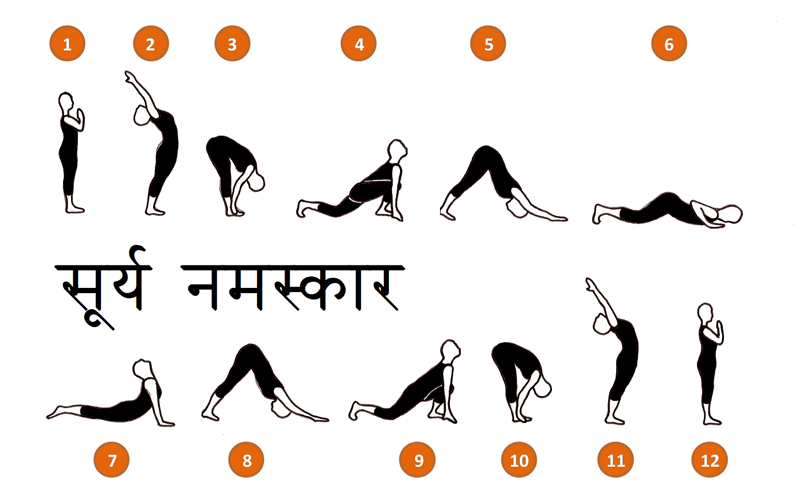
  1. Tadasana – ॐ मित्राय नमः
  2. Urdhva Hastasana – ॐ रवये नमः
  3. Padahastasana – ॐ सूर्याय नमः
  4. Anjaneyasana – ॐ भानवे नमः
  5. Parvatasana – ॐ खगाय नमः
  6. Ashtanga Namaskara – ॐ पूष्णे नमः
  7. Bhujangasana – ॐ हिरण्यगर्भाय नमः
  8. Parvatasana – ॐ मरीचये नमः
  9. Ashva Sanchalanasana – ॐ आदित्याय नमः
  10. Padahastasana – ॐ सवित्रे नमः
  11. Urdhva Hastasana – ॐ अर्काय नमः
  12. Tadasana – ॐ भास्कराय नमः

Surya Namaskar is a complete body workout that boosts flexibility, strength, and stamina. This yoga sequence involves a series of postures and breathing exercises. It stretches your muscles, making you more flexible, while also building your physical strength. Plus, it enhances your endurance over time.

Benefits of doing Surya Namaskar daily

These twelve Surya Namaskar steps improve health and have multiple other benefits, which include –

  • Promotes cardiovascular wellness, which brings a glow to your face; improves the elasticity of the skin, thus preventing the onset of wrinkles, and makes your skin look radiant.
  • Activates the nerve system
  • Aids in muscle stretching, flexing, and toning
  • It helps in controlling weight. Regularly practicing Surya Namaskar can help with weight loss and keeping a healthy body weight. This is because Surya Namaskar is a holistic exercise that burns calories, boosts metabolism, and improves digestion. By doing it regularly, you can shed excess weight and maintain a balanced body weight.
  • Improves immune system performance
  • Improves cognitive abilities
  • It enhances general health, builds muscle, and calms the mind.
  • Enhances the smooth functioning of your digestive system.
  • Support in developing a steady and comfortable meditation posture.
  • Suryanamaskara has developed into a practice of twelve postures that weave together to generate prana (subtle energy), aiming towards the purification and rejuvenation of the practitioner. 
  • Suryanamaskara has a holistic effect and brings body, mind, consciousness, and soul into balance.

The ideal time to perform Surya Namaskar is during sunrise while facing towards the sun. Even if you miss your Surya Namaskar during sunrise/morning). Just make sure you do it with an empty stomach and don’t miss your Surya Namaskar practice.

Surya Namaskar sculpture at Delhi airport

Career Path after SSC and HSC (Marathi)

दोन्ही निकाल (एचएससी आणि एसएससी) जाहीर झाल्यामुळे, भविष्यातील करिअर योजना ठरवण्याची वेळ आली आहे. हा जीवनातील एक महत्त्वाचा निर्णय आहे. त्यातून विद्यार्थ्यांचे भविष्य घडते.

अनेकांच्या मते, करिअर तुम्हाला चांगले कमावण्यास मदत करते आणि तुमचा सामाजिक दर्जा वाढवण्यास मदत करते. पण, स्पष्टपणे सांगायचे तर ते पूर्ण सत्य नाही. करिअर हे असे आहे की ज्याचा तुम्ही उत्कटतेने पाठपुरावा करू शकता आणि तुम्हाला जीवन जगण्याचे समाधान देते.

मी अनेक वर्षांपासून करिअर समुपदेशक आणि प्रशिक्षक म्हणून काम करत आहे. अद्वितीय गुण असलेले अनेक विद्यार्थी मला भेटले. मी त्यांच्याकडे असलेल्या चांगल्या गुणांवर काम करण्याचा प्रयत्न करतो, त्यांना त्यांच्या करिअरच्या मार्गावर जाण्यास मदत करतो.

मला पालक आणि विद्यार्थ्यांकडून करिअरविषयी सूचना विचारणारे अनेक कॉल येतात. करिअरचा प्रत्येक पर्याय चांगला आहे असे मला वाटते. विविधता म्हणजे सौंदर्य. कोणताही देश आणि समाज वेगवेगळ्या क्षेत्रात काम करणाऱ्या अनेक लोकांचा समावेश असतो. प्रत्येक पालकाने ते समजून घेणे आवश्यक आहे. समजूतदारपणाचा अभाव अनेक विद्यार्थ्यांच्या करिअरला बाधा आणतो. पैसे कमवण्याची प्रवृत्ती हा एक चांगला निकष असू शकतो, परंतु तो एकमेव असू नये.

आपण आयुष्यात अशा अनेक घटना पाहिल्या आहेत ज्यात अनेक विद्यार्थी एसएससी आणि एचएससीमध्ये चांगले गुण मिळवूनही त्यांच्या पालकांनी निवडलेल्या करिअरच्या मार्गात उत्कृष्ट कामगिरी करू शकले नाहीत. कारणे अनेक आहेत, जसे की – अनेक पालक आपल्या मुलांसाठी करिअरचा मार्ग ठरवताना सुशिक्षित आणि यशस्वी मित्र/नातेवाईकांची मदत घेतात, ज्यांना मुलांबद्दल काहीच समज नसते; अनेक पालकांना त्यांच्या मुलांनी त्या करिअर पर्यायांचा पाठपुरावा करावा असे वाटते जे करण्यात ते अपयशी ठरतात; अनेक पालकांना त्यांच्या मुलांनी आपल्या मुलांना काय आवडते यापेक्षा त्यांना आवडणारे करिअर करावे असे वाटते.

त्याऐवजी, पालकांनी आपल्या मुलांना समजून घेतले पाहिजे किंवा त्यांना त्यांच्या करिअरचा मार्ग समजून घेण्यासाठी मदत केली पाहिजे. एक चांगले करिअर कोचिंग किंवा करिअर समुपदेशन सत्र विद्यार्थ्याच्या करिअरचा कल समजून घेण्यासाठी अधिक उपयुक्त ठरेल.

यशस्वी करिअरसाठी व्यक्तिमत्त्वाची वैशिष्ट्ये, छंद, विचार, आवडी आणि कौशल्ये यांचा विचार केला पाहिजे. जर प्रत्येक पालकाने ही साधी गोष्ट समजून घेतली तर ते आपल्या मुलांना त्यांच्या करिअर आणि जीवनात आनंदी आणि समृद्ध होण्यास मदत करतील…✍️
करिअर समुपदेशक आणि प्रशिक्षक

Courses after 10th and 12th

After SSC (10th grade) / HSC (12th grade), students can pursue various vocational courses, diploma programs, or continue their academic studies in high school. After 10th and 12th, several courses offer excellent opportunities for career development and higher education :

ITI (Industrial Training Institute) Courses: These courses offer practical training in various trades like electrician, electronic mechanic, COPA, fitter, mechanic, welder, plumber, and many other. ITI stands for Industrial Training Institute, a type of vocational school in India that provides practical, hands-on training in various trades and skills. ITIs offer courses ranging from a few months to two years, focusing on skills development for industry employment. They are overseen by the Directorate General of Training (DGT) within the Ministry of Skill Development and Entrepreneurship. 

Diploma in Engineering: Diplomas are available in various engineering fields, including computer, automobile, and mechanical engineering. These courses provide a foundational understanding of various engineering disciplines (e.g., Mechanical, Electrical, Civil, Computer Science) and can lead to entry-level jobs in various industries. A Diploma in Engineering is a 3-year course, often referred to as a Polytechnic program, that provides a foundation in engineering principles and skills. It’s equivalent to the first two years of a bachelor’s degree in engineering (B.E. or B.Tech). Students can pursue various engineering specializations, including Civil, Mechanical, Electrical, and Computer Science. Diploma holders can enter the workforce as junior engineers or pursue further education, such as lateral entry into the second year of a B.E./B.Tech program. 

Paramedical Courses: These courses offer specialized training in medical fields like Medical Lab Technology (MLT), and can lead to roles in hospitals and healthcare facilities. This course focuses on medical laboratory procedures and techniques. DMLT stands for Diploma in Medical Laboratory Technology. It is a two-year diploma course that focuses on the principles and practical skills of medical laboratory science. The course prepares individuals to work as medical laboratory technicians or technologists in various healthcare settings. 

Computer Courses: Options like Digital Marketing, Graphic Designing, and Computer Applications offer skills that are highly sought after in the digital age, with opportunities in various industries.

Diploma in Computer Applications (DCA): A Diploma in Computer Applications (DCA) is a short-term, vocational program that provides a foundational understanding of computer applications and related skills. It’s typically a 6-month to 1-year course, equipping individuals with practical knowledge and skills for entry-level roles in the IT sector or for enhancing computer literacy. 

Diploma in Graphic Design is a short-term, practical course focused on developing skills for visual communication. It typically covers design principles, software proficiency, and various design applications. The course can help individuals gain a foundational understanding of graphic design and prepare them for entry-level roles or further studies. 

Diploma in Hotel Management: This course provides practical training in hospitality, catering, and tourism, preparing students for careers in hotels, resorts, and other hospitality settings. A Diploma in Hotel Management is a professional course that provides students with the knowledge and skills necessary for a career in the hospitality industry. It is a shorter, more focused alternative to a bachelor’s degree, typically lasting 1-3 years, and equips graduates with practical skills in areas like food and beverage, front office operations, and housekeeping. 

Diploma in Fashion Design: A Diploma in Fashion Design is a vocational course that equips students with practical skills and knowledge to pursue careers in the fashion industry. It covers various aspects like design, garment construction, textiles, pattern making, and fashion marketing. The course helps students develop creative, design, and visualization skills, making them suitable for various roles in the fashion world. 

Diploma in Interior Design: A Diploma in Interior Design is a professional program that teaches individuals the art and science of enhancing interior spaces to make them aesthetically pleasing, functional, and safe. These programs typically cover topics like design fundamentals, color theory, material selection, and the use of various design software. Diploma programs can range from one to three years, depending on the specific institution and program structure. 

Diploma in agriculture: A Diploma in Agriculture is a short-term, vocational program that provides practical and theoretical knowledge in modern agricultural practices. It typically covers areas like crop production, soil science, pest management, and agricultural machinery. The program can be completed in one or two years and is often pursued after 10th grade or equivalent. 

Science:

  1. Engineering: B.Tech/BE in various specializations like Computer Science, Mechanical, Civil, and Electrical Engineering. 
  2. Medicine: MBBS (Bachelor of Medicine and Bachelor of Surgery), BDS (Bachelor of Dental Surgery), B.Pharm (Bachelor of Pharmacy), B.Sc. in Nursing, etc. 
  3. Other Sciences: B.Sc. in Biotechnology, Food Science, Nutrition, Chemistry, Physics etc. 

Arts:

  1. Humanities: B.A. in various subjects like English, History, Political Science, Psychology, Economics, etc. 
  2. Creative Arts: B.Sc. in Fashion Design, Bachelor of Journalism and Mass Communication (BJMC), Bachelor of Hotel Management (BHM), etc. 
  3. Other Options: B.Sc. in Hospitality Studies, Bachelor of Social Work (BSW), Bachelor of Event Management, etc. 

Commerce:

  • Business and Management: BBA (Bachelor of Business Administration), B.Com (Bachelor of Commerce). 
  • Accounting and Finance: Courses related to chartered accountancy, accounting, and finance are also popular. 
  • Other Options: Bachelor of Economics (B.A. in Economics), etc. 

Entrance Exams: Many universities and institutions require entrance exams like JEE Mains, NATA, BITSAT, etc. for admission to specific courses. 

Factors to consider when choosing a course:
  • Interests and Career Goals: Choose a course that aligns with your interests and desired career path. 
  • Research: Explore different courses and their career prospects.
  • Job Market Demand: Consider courses that are in demand and offer good job prospects. 
  • Course Duration and Cost: Evaluate the length of the course and the associated costs to ensure it fits your needs and budget. 
  • Institution Reputation: Choose a reputable institution with a good track record of student success. 
  • Consider Your Strengths and Weaknesses: Choose a course that aligns with your academic abilities and interests.
  • Talk to Mentors: Seek advice from teachers, counselors, and professionals in your field of interest.
Career Coach and Career Counselor

Healthy and Fit

Health is a state of complete physical, mental, and social well-being, not merely the absence of disease or infirmity. It involves a holistic view of an individual’s well-being, including their ability to function, cope with the environment, and realize their potential. 

  1. Physical Health: This refers to the functioning of the body’s systems, including organs, tissues, and cells. It encompasses factors like physical fitness, nutrition, and protection from disease. 
  2. Mental Health: This relates to an individual’s emotional, psychological, and social well-being. It includes aspects like mental stability, emotional regulation, and the ability to cope with stress and challenges. 
  3. Social Health: This focuses on an individual’s relationships and interactions with others, as well as their sense of belonging and community. It includes aspects like social skills, communication, and the ability to form and maintain healthy relationships. 

Fitness, in general, refers to the state of being physically healthy and strong, and the ability to perform everyday activities with vigor and without undue fatigue. It encompasses both physical and mental well-being, enabling individuals to carry out daily tasks effectively and enjoy leisure activities with ample energy.

  1. Physical Fitness: It is a state of health and well-being and, more specifically, the ability to perform aspects of sports, occupations, and daily activities. This encompasses the ability to perform daily tasks without fatigue, maintain strong muscles and bones, and improve cardiovascular health. It involves multiple aspects, including:
  • Cardiorespiratory endurance: The ability of the heart and lungs to deliver oxygen to working muscles. 
  • Muscular strength: The ability of a muscle to exert force.
  • Muscular endurance: The ability of a muscle to exert force over a prolonged period.
  • Flexibility: The ability of joints to move through a full range of motion. 
  • Body composition: The proportion of fat to fat-free mass. 

2. Mental Fitness: This involves managing stress, improving mood, and enhancing cognitive function through regular physical activity.

  • Emotional Intelligence: This includes the ability to recognize, understand, and manage your own emotions, as well as the emotions of others. 
  • Stress Management: Developing healthy coping mechanisms to deal with stress and adversity. 
  • Self-Awareness: Understanding your thoughts, feelings, and behaviors, and how they impact your well-being. 
  • Resilience: The ability to bounce back from setbacks and adapt to change. 
  • Positive Mindset: Cultivating a positive outlook and finding the good in situations. 
  • Cognitive Abilities: Enhancing cognitive functions like focus, memory, and critical thinking. 
  • Social Connectedness: Maintaining healthy relationships and feeling supported by others. 
  • Help-Seeking Behavior: Knowing when and how to ask for support when needed. 

Importance of being healthy and fit:

  • Increased Energy: A healthy body provides the energy needed to perform daily activities and enjoy life. 
  • Reduced Risk of Chronic Diseases: Making healthy choices can significantly reduce the risk of developing chronic diseases like heart disease, stroke, and diabetes. 
  • Improved Mental Health: Physical activity and a healthy lifestyle can also improve mental well-being by reducing stress, anxiety, and depression. 
  • Enhanced Immunity: A healthy body is better equipped to fight off infections and illnesses. 
  • Better Sleep: Regular physical activity and a healthy diet can lead to improved sleep quality. 
  • Improved health: Reduces the risk of chronic diseases like heart disease, diabetes, and certain cancers. 
  • Enhanced energy levels: Helps to feel less tired and more energetic throughout the day. 
  • Increased physical capacity: Enables individuals to perform daily tasks and activities with greater ease. 
  • Improved mental health: Can reduce stress, improve mood, and enhance cognitive function. 
  • Being healthy and strong: Having the capacity to perform everyday tasks and activities. 
  • Having sufficient energy: Being able to tackle daily routines and enjoy leisure time without feeling drained. 
  • Maintaining a balanced lifestyle: Including regular physical activity, proper nutrition, and stress management. 
  • Improved Well-being: Mental fitness contributes to overall psychological and emotional health. 
  • Enhanced Coping Skills: It equips you with the tools to navigate life’s challenges and setbacks. 
  • Better Decision-Making: A mentally fit mind can make clear, reasoned decisions. 
  • Increased Resilience: You are better able to withstand stress and bounce back from adversity. 
  • Improved Relationships: Mental fitness fosters healthy relationships and social connections. 
  • Increased Productivity and Creativity: A mentally healthy mind is more focused, productive, and creative. 

Here’s a more detailed look at how to incorporate health and fitness into your life:

  • Be mindful of what you doing.
  • Aim for at least 30 minutes of moderate-intensity exercise most days of the week, such as brisk walking, cycling, or dancing. 
  • Incorporate a variety of activities: like strength training, flexibility exercises, and balance workouts to work different muscle groups and keep your routine interesting.
  • Find activities you enjoy: to make exercise a sustainable part of your lifestyle.
  • Consider incorporating physical activity into your daily routine, like taking the stairs instead of the elevator or walking during your lunch break. 
  • Focus on Fat loss rather than weight loss.
  • Eat a balanced diet: that includes a variety of fruits, vegetables, whole grains, lean protein, and healthy fats. 
  • Focus on nutrient-rich foods: and limit processed foods, sugary drinks, and unhealthy fats. 
  • Stay hydrated by drinking plenty of water: throughout the day. 
  • Aim for 7-9 hours of quality sleep per night: to support your physical and mental health. 
  • Create a relaxing bedtime routine: to help you wind down before sleep. 
  • Avoid screens and caffeine before bed: to promote better sleep quality. 
  • Practice relaxation techniques: such as meditation, yoga, or deep breathing to reduce stress. 
  • Engage in activities you enjoy: to help you relax and recharge. 
  • Connect with others: and build strong social connections to support your mental well-being. 
  • Set realistic goals: and prioritize tasks to avoid feeling overwhelmed. 
  • Consult a Counselor/ Dietitian/Fitness Professional/Health Coach.

In essence, health and fitness in life is about optimizing physical and mental health to live a more fulfilling and active life, reducing the risk of various health problems, and enhancing overall quality of life. 

Fitness Professional and Health Coach

Creativity

Creativity is a key skill for personal growth and professional success. It is important because it fuels problem-solving, drives innovation, fosters emotional well-being, and helps individuals connect with others.

Creativity comes from a combination of both nature and nurture. Creative people are often born with certain traits, such as curiosity, that can be nurtured and developed over time.

Creativity helps to think outside the box.

Creativity allows you to look at problems and challenges from different angles and to come up with solutions. This ability to think outside the box is essential in today’s fast-paced, rapidly changing world.

Key aspects of creativity skills include:

  • Imagination: The ability to envision new possibilities and scenarios.
  • Be Unique: The ability to come up with unique and novel ideas.
  • Problem-solving: Using creativity to identify and solve complex problems.
  • Innovation: The ability to develop new processes, products, or services.
  • Flexibility: The willingness to adapt and embrace new ideas and perspectives.
  • Communication: Effectively expressing creative ideas and solutions.
  • Curiosity: A natural inclination to explore and learn new things.
  • Open-mindedness: Being receptive to diverse perspectives and ideas.
  • Confidence: Believing in one’s creative abilities and expressing ideas. 

Here’s a more detailed look at why creativity matters:

  1. Problem-Solving and Innovation:
  • Creativity allows individuals to approach challenges with fresh perspectives and find unique solutions. 
  • It encourages thinking “outside the box” and exploring unconventional ideas. 
  • In business, creativity drives innovation, leading to new products, services, and processes. 
  • Creativity can also help overcome biases and expand perspectives, leading to more inclusive and equitable solutions. 

2. Emotional and Social Benefits:

  • Creativity provides a channel for expressing emotions, fostering empathy, and developing emotional intelligence. 
  • It can also reduce stress, increase self-esteem, and promote overall well-being. 
  • Creative activities can help individuals connect with others, share their experiences, and build meaningful relationships. 

3. Personal and Professional Growth:

  • Creativity boosts confidence, increases motivation, and enhances productivity. 
  • It encourages lifelong learning and adaptability in a constantly changing world. 
  • Creative skills are highly valued in the workplace, making individuals more competitive and adaptable.

Examples of creativity skills :

  • In the workplace: Generating new marketing strategies, designing innovative products, developing better work processes, and improving customer service. 
  • In the arts: Creating new forms of artistic expression, developing new musical compositions, and writing original stories. 
  • In science: Discovering new scientific theories, designing and developing new technologies. 
  • In everyday life: Coming up with new ideas for hobbies, finding creative solutions to household problems, and organize events uniquely. 

Parents and teachers must understand that every child must have this critical skill for growth. They should give more opportunities and encourage children and students to think ‘out of the box.’

To cultivate creativity:

  • Practice: Experiment with different approaches to problem-solving and idea generation.
  • Seek feedback: Get constructive criticism on your ideas and work. View criticism as an opportunity for learning and improvement. 
  • Stay curious: Explore new subjects, learn from others, and keep an open mind.
  • Embrace challenges: Don’t be afraid to tackle problems and explore new ideas.
  • Develop a creative mindset: Encourage yourself to think outside the box and explore different possibilities.
  • Brainstorm: Generate a wide range of ideas, even if they seem unconventional. 
  • Doodle: Free-form drawing can unlock creative thinking. 
  • Learn from Others: Connect with creative people, read widely, and explore different fields. 
  • Creative hobbies: Incorporate small creative activities into your workday, like dancing, drawing, or listening to music. 
  • Keep an Ideas Journal: Capture thoughts and inspirations as they arise. 
  • Challenge Yourself: Regularly step outside your comfort zone and try new things. 
  • Have Confidence: Believe in your creative abilities and don’t fear taking risks. 
  • Don’t Be Afraid to Fail: Learn from your mistakes and see them as stepping stones. 
  • Change Your Environment: A fresh space can inspire new ideas.
  • Change Your Habits: Make a conscious effort to incorporate creativity into your daily life.
  • Mind Mapping: Use visual brainstorming to explore ideas and connections. 
  • Visualization: Try to visualize.
  • Take Creative Courses: Learn specific skills or explore different art forms.  
  • Read Widely: Expand your knowledge and explore different genres and styles. 
  • Travel: New experiences can broaden your perspective and inspire new ideas. 

By incorporating these strategies into your daily routine, you can cultivate a more creative mindset and unlock your innovation potential.

Success Coach

‘Brain with Beauty’

There is a saying that “behind every successful man stands a woman”. But, the time has come to elaborate this saying as women have more potential and are contributing more in the success of family, society, and nation.

We have organized a ‘Beauty with Brain’ session for successful women.

Batch size – 30 participants

Topics to be covered :

1. Nari Shakti
2. Aspects of good personality,
3. Positive Attitude,
4. Emotional Intelligence,
5. Goal setting,
6. Time Management,
7. Professional Mindset,
8. Stress Management,
9. Health Management,

There will be many activities and games related to above-mentioned topics. It will be an interactive session.

Registration is on…

Contact :

Corporate Trainer, Counselling Psychologist, Dietitian, Fitness Professional, Life Coach, Mentor, Motivational Speaker, and Wellness Coach.  
9604900458

Body Fat Loss

Fat loss refers to a decrease in body fat. It is a healthier outcome as it focuses on reducing the primary contributor to various health risks. 

Why Fat Loss is Preferred:

  • Health Benefits: Reducing body fat, particularly visceral fat (around the organs), is associated with lower risks of chronic diseases like type 2 diabetes, heart disease, and certain cancers. 
  • Improved Body Composition: Fat loss can lead to a more desirable body composition, with a higher percentage of lean body mass (muscle) and less fat. 
  • Long-Term Health: Maintaining healthy body measurements and composition enhances overall health and well-being in the long run. 

How to Focus on Fat Loss:

  • Calorie Deficit: Creating a calorie deficit (consuming fewer calories than you burn) is essential for fat loss. 
  • Balanced Diet: Prioritize nutrient-rich foods, including protein, healthy fats, and complex carbohydrates. 
  • Physical Activity: Combine regular cardio with strength training to burn calories and build muscle, which can further enhance fat loss. 
  • Track body measurements and progress: Monitor body measurements and composition changes to assess progress and make necessary adjustments. 

How to burn body fats:

  1. Avoid sugar intake,
  2. Avoid vegetable oil intake,
  3. Balanced diet,
  4. Be Active,
  5. Fitness regime that suits you,
  6. Focus on the body measurements and clothes fit more than reading a scale,
  7. Hang out with health-focused friends,
  8. Discuss with the right person.

In summary, fat loss is the more targeted and healthier goal, focusing on reducing the primary contributor to health risks and improving overall body composition. o health risks and improving overall body composition. 

Dietitian and Fitness Professional